To Book an Appointment Call Us +91-11-69-262-700

Lung cancer is a serious condition in which abnormal cells in the lungs grow uncontrollably, forming tumours that can damage healthy lung tissue. It is one of the leading causes of cancer-related deaths worldwide and often shows no noticeable symptoms in the early stages. Tobacco smoking remains the primary risk factor, while exposure to toxins such as asbestos or environmental pollutants can also contribute. The disease is broadly classified into two main types, non-small cell lung cancer and small cell lung cancer, which differ in their growth patterns and treatment approaches.

Who is at High Risk of Lung Cancer?

Individuals at higher risk include:

  • Smokers (active and passive) – the primary risk factor.
  • People with a family history of lung cancer.
  • Individuals exposed to asbestos, radon gas, or air pollution.
  • Patients with prior lung diseases such as COPD or tuberculosis.

Types of Lung Cancer

Lung cancer is not a single disease but comprises different types that vary in how they grow, spread, and respond to treatment. Identifying the type of lung cancer is crucial for deciding the most effective treatment plan and predicting outcomes. The main categories of lung cancer are classified based on the appearance of cancer cells under a microscope and their growth behaviour.

  • Non-Small Cell Lung Cancer (NSCLC): This is the most common type of lung cancer, accounting for nearly 85% of all lung cancers. NSCLC generally grows and spreads more slowly than other forms, making early detection and treatment particularly important. Subtypes include adenocarcinoma, squamous cell carcinoma, and large cell carcinoma.
  • Small Cell Lung Cancer (SCLC): A more aggressive form, SCLC grows rapidly and tends to spread quickly to other parts of the body. Due to its rapid progression, early diagnosis and intensive treatment are crucial.
  • Other Rare Types: These include lung carcinoid tumours, which typically grow slowly and have a better prognosis, and sarcomatoid carcinoma, a rare and more aggressive form. Though uncommon, awareness of these types is important for accurate diagnosis and personalised treatment.

Symptoms of Lung Cancer

Common signs and symptoms include:

  • Persistent cough that worsens over time
  • Chest pain or discomfort
  • Shortness of breath
  • Coughing up blood (hemoptysis) – requires urgent medical attention.
  • Unexplained weight loss and fatigue
  • Hoarseness in voice
  • Recurrent respiratory infections (pneumonia or bronchitis)

When to See a Doctor:

Seek medical attention promptly, especially for hemoptysis or sudden worsening symptoms, rather than waiting two weeks.

Causes of Lung Cancer

The primary causes include:

  • Cigarette smoking – the leading cause Secondhand smoke exposure
  • Occupational exposure to harmful chemicals (asbestos, arsenic, diesel fumes)
  • Radiation exposure – primarily high-dose medical radiation or environmental radon exposure
  • Genetic predisposition – a contributing factor, less common than environmental causes
  • Environmental pollutants

Diagnosis / Tests for Lung Cancer

Accurate and timely diagnosis of lung cancer is essential to determine the most effective treatment plan and improve patient outcomes. At Venkateshwar Hospitals, our specialists use a combination of modern diagnostic tools and techniques:

  • Imaging Tests: Advanced imaging plays a key role in detecting lung abnormalities. Chest X-rays and CT scans help visualise tumours and assess their size and location. PET scans are typically reserved for advanced cases or when there is suspicion of metastasis, helping to evaluate if cancer has spread to other organs.
  • Lab & Pathology Tests: Blood tests provide information about overall health and organ function. Sputum cytology may occasionally be used to examine cells coughed up from the lungs, although its sensitivity is limited compared to imaging and biopsy methods.
  • Biopsy Procedures: Tissue sampling is the gold standard for confirming the presence of lung cancer. Methods include bronchoscopy-guided biopsy, image-guided needle biopsy, or surgical biopsy, depending on tumour location and patient condition.
  • Molecular & Genetic Testing: These tests identify specific genetic mutations, such as EGFR or ALK, which can guide personalised targeted therapies for more effective treatment.

Early and precise diagnosis at Venkateshwar Hospitals ensures that patients receive tailored treatment plans, significantly improving success rates and long-term outcomes.

Treatment of Lung Cancer

Lung cancer treatment is personalised based on the type, stage, and overall health of the patient. At Venkateshwar Hospitals, a multidisciplinary team delivers comprehensive care using the following approaches:

  • Surgery: Surgical removal of the tumour is often the primary treatment for early-stage lung cancer. Procedures such as lobectomy, pneumonectomy, or wedge resection help eliminate cancerous tissue while preserving lung function as much as possible.
  • Radiation Therapy: High-energy radiation is used to destroy cancer cells. Techniques include external beam radiation or stereotactic body radiotherapy (SBRT), which are chosen based on the tumour location and stage.
  • Chemotherapy: Systemic drug therapy targets rapidly dividing cancer cells. Chemotherapy can be administered alone or in cycles combined with other treatments for advanced-stage disease.
  • Targeted Therapy: These drugs interfere with specific molecular pathways that promote cancer growth, offering a more personalised treatment approach for patients with identifiable genetic mutations, such as EGFR or ALK.
  • Immunotherapy: Checkpoint inhibitors, including those targeting PD-1, PD-L1, and CTLA-4, enhance the body’s immune response against cancer cells, particularly in advanced or metastatic disease.
  • Combined Modality Treatment: In certain stages, chemotherapy is combined with radiation therapy to increase treatment effectiveness and reduce the risk of recurrence.
  • Palliative Care: For patients in advanced stages, palliative care focuses on relieving symptoms, enhancing comfort, and maintaining quality of life.

Through these coordinated and advanced treatment options, Venkateshwar Hospitals ensures patients receive holistic care aimed at the best possible outcomes.

Complications of Lung Cancer

Lung cancer can lead to several serious complications that affect overall health and quality of life, ranging from spread to other organs to breathing difficulties and life-threatening blood clots.

  • Metastasis: Cancer can spread from the lungs to other organs such as the brain, liver, or bones, causing additional health issues and organ dysfunction.
  • Pleural Effusion: Accumulation of fluid around the lungs, leading to chest pain, persistent cough, and difficulty breathing.
  • Breathing Difficulties: Tumour growth or airway obstruction can reduce lung capacity, making it challenging to breathe normally.
  • Chronic Pain: Persistent pain may result from tumour invasion into surrounding tissues or nerves.
  • Venous Thromboembolism: Lung cancer increases the risk of blood clots, including deep vein thrombosis (DVT) and pulmonary embolism (PE), which can be life-threatening.
Prevention of Lung Cancer

You can reduce your risk by:

  • Quitting smoking and avoiding tobacco products
  • Limiting exposure to secondhand smoke
  • Reducing contact with environmental toxins
  • Maintaining general health is beneficial, but avoiding tobacco and minimising pollutants are key preventive measures.
  • Undergoing regular screenings if at high risk

Why Choose Venkateshwar Hospitals for Lung Cancer Treatment in Delhi?

  • Advanced Diagnostics: PET-CT, molecular testing, biopsy facilities
  • Multidisciplinary Team: Oncologists, pulmonologists, thoracic surgeons
  • State-of-the-Art Treatments: Minimally invasive surgery, targeted therapies, immunotherapy
  • Personalised Cancer Care: Tailored treatment plans for every patient
  • Patient-Centric Approach: Palliative care, counselling, nutrition support
  • Location Advantage: Conveniently accessible lung cancer treatment in Delhi

Prognosis & Recovery of Lung Cancer

The prognosis for lung cancer patients depends on several factors, including the stage at diagnosis, the type of lung cancer, and the patient’s overall health. Early detection plays a crucial role in improving survival rates, as cancers identified at an initial stage are often more responsive to treatment. At Venkateshwar Hospitals, a holistic, multidisciplinary approach ensures that every patient receives personalised care, combining surgical, medical, and supportive therapies. This includes advanced treatments, nutritional support, physiotherapy, and rehabilitation to promote faster recovery. Regular follow-ups and lifestyle modifications further enhance long-term outcomes. With timely intervention, precise treatment planning, and continuous care, patients can achieve better disease management, improved survival rates, and a significantly enhanced quality of life.
Get In Touch

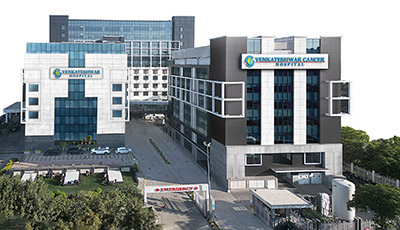
Venkateshwar Hospital for Cancer Treatment
Need Assistance?

We're here to help!
Feel free to get in touch with us
for any service or support.

+91-11-48-555-555

Contact Us

Frequently Asked Questions

1. What are the early signs of lung cancer?

Early signs of lung cancer may include a persistent cough that worsens over time, chest pain or discomfort, shortness of breath, coughing up blood, and unexplained weight loss. Recognising these symptoms early is crucial for timely diagnosis and treatment.

2. What tests are used to diagnose lung cancer?

Lung cancer is diagnosed through a combination of imaging tests, such as chest X-ray, CT scan, and PET scan, along with biopsy procedures, blood tests, and molecular or genetic testing to guide personalised treatment options.

3. Who treats lung cancer?

Treatment for lung cancer is provided by a multidisciplinary team of specialists, including oncologists, pulmonologists, thoracic surgeons, and specialists at Venkateshwar Hospital, who collaborate to deliver comprehensive and coordinated care.

4. Is lung cancer curable?

Lung cancer detected at an early stage has a higher likelihood of successful treatment. Advanced stages may require a combination of surgery, chemotherapy, radiation, and targeted therapies to manage the disease effectively.

5. How much does lung cancer treatment cost in Delhi?

The cost of lung cancer treatment varies depending on the stage of cancer and the type of treatment required. Venkateshwar Hospitals provides personalised care with transparent pricing to ensure patients are informed at every step.

6. How can I reduce my risk of lung cancer?

You can reduce your risk by quitting smoking, avoiding secondhand smoke, limiting exposure to environmental pollutants, maintaining a healthy lifestyle, and undergoing regular screenings if you are at high risk.


Our Medical Experts

Dr. Sunil Kumar Gupta

MBBS, MD, DM

Principal Director & HOD

Haemato Medical Oncology & Bone Marrow Transplant

Book an Appointment

Dr. Chitresh Yadav

MBBS, MD (Pathology), DM (Clinical Haematology)

Consultant

Haemato Oncology & Bone Marrow Transplant

Book an Appointment

Dr. Santosh Raut Kurmi

MBBS, MD, Fellowship (Haemato Oncology & BMT)

Consultant

Haemato Oncology & Bone Marrow Transplant

Book an Appointment

Dr. Kuldeep Sharma

MBBS, MD, DNB, PGDHHM

Director

Radiation Oncology, Brain Tumour Clinic

Book an Appointment

Dr. Deepika Chauhan

MBBS, DMRT, DNB

Sr. Consultant & Unit Head

Radiation Oncology, Brain Tumour Clinic

Book an Appointment

Dr. (Lt. Col) Aditya Pradhan

MBBS, MS, DNB

Principal Director

Urology, Uro-Oncology, Robotics & Renal-Transplant

Book an Appointment

Dr. (Maj Gen) D V Singh

MBBS, MS, M.Ch (Urology)

Principal Director

Urology, Uro-Oncology, Robotics & Renal-Transplant

Book an Appointment

Dr. Rohit Juneja

MBBS, MS (Gold Medallist), M.Ch

Sr. Consultant

Urology, Uro-Oncology, Robotics & Renal-Transplant

Book an Appointment

Dr. Ashutosh Kumar

MBBS, MS, DrNB (Urology)

Associate Consultant

Urology, Uro-Oncology, Robotics & Renal-Transplant

Book an Appointment

Dr. Hitesh Kumar Kundu

MBBS, DNB (Surgery), DrNB (Urology)

Associate Consultant

Urology, Uro-Oncology, Robotics & Renal-Transplant

Book an Appointment

Dr. Rohan Nautiyal

MBBS, MS, M.Ch - Urology (CMC, Vellore)

Sr. Consultant

Urology, Uro-Oncology, Robotics & Renal-Transplant

Book an Appointment

Dr. Dinesh Chandra Katiyar

MBBS, MS, M.Ch

Director

Surgical Oncology & Robotic Surgery

Book an Appointment

Dr. Rudra Prasad Acharya

MBBS, MS, FAIS, FACS, FIAGES

Director

Surgical Oncology & Robotic Surgery

Book an Appointment

Dr. Shveta Tyagi Giri

MBBS, MS, Fellowship/Trainee in Gynae Oncology

Director

Gynae Oncology & Robotic Surgery

Book an Appointment

Dr. (Gp Capt) Sumesh Kaistha

MBBS, MS, DNB (Gen. Surgery), FRCS (Glasg), FRCS (Eng), M.Ch (GI Surgery - AIIMS), MIPD Ed (Fellowship in HPB & Liver Transplantation), UK

Director

Liver Transplant & Robotics
GI Surgery, GI Oncology, Bariatrics & Robotic Surgery

Book an Appointment

Dr. Vignesh Mani

MBBS, MS (General Surgery), M.Ch (GI Surgery) (AIIMS, New Delhi), Fellowship in Liver Transplant and HPB Surgery

Consultant

Liver Transplant, GI Surgery, GI Oncology & Robotics

Book an Appointment

Dr. Aditya Gupta

MBBS, MD (Paediatrics), DM (Paediatric Oncology)

Consultant

Paediatric Oncology

Book an Appointment

Related Blog

Related Conditions & Treatments

Designed and Developed By: Innovative Infonet Private Limited

Book an Appointment
Quick Query