To Book an Appointment Call Us +91-11-69-262-700

Gastric cancer, also known as stomach cancer, is a malignant tumour that develops in the stomach, primarily in the glandular tissue of its inner lining. It occurs when stomach cells grow and divide uncontrollably, resulting in the formation of abnormal tissue. Early stages of the disease may not show noticeable symptoms, but as it progresses, patients may experience unexplained weight loss, abdominal pain, nausea, and vomiting. Risk factors include lifestyle choices such as smoking, a diet high in salt or processed foods, as well as non-modifiable factors like age and family history. Stomach cancer remains a significant cause of cancer-related deaths worldwide and is an increasing health concern in India, often diagnosed at advanced stages due to its subtle early symptoms.

Risk Factors for Stomach (Gastric) Cancer

People at higher risk include those with:

  • Family history of gastric cancer
  • Helicobacter pylori (H. pylori) infection
  • A diet high in salt, smoked, or processed foods.
  • Smoking and heavy alcohol consumption
  • Age (most common after 50) and male gender
  • Chronic gastritis or a history of stomach polyps

Types of Gastric Cancer

Gastric cancer can develop in different types of cells within the stomach, and each type has distinct characteristics, risk factors, and implications for diagnosis and management.

  • Adenocarcinoma- Most common (>90%), originating in the glandular lining of the stomach
  • Lymphoma – Cancer originating in the immune cells of the stomach wall
  • Gastrointestinal stromal tumours (GIST) – Rare tumours arising from the stomach’s connective tissue
  • Carcinoid tumours – Slow-growing cancers beginning in hormone-producing cells of the stomach

Symptoms of Gastric Cancer

The symptoms of gastric cancer can vary depending on the stage of the disease, often starting subtly and becoming more noticeable as the cancer progresses. Early symptoms may include:

  • Indigestion, bloating, or heartburn
  • Loss of appetite
  • Mild abdominal discomfort
Later-stage symptoms can include:
  • Vomiting blood or coffee-ground-like material
  • Black stools (melena)
  • Severe abdominal pain
  • Unexplained weight loss and fatigue
When to see a doctor:

If you experience persistent indigestion, unexplained weight loss, or blood in vomit/stools, consult a specialist immediately.

Causes of Gastric Cancer

Several factors can contribute to the development of gastric cancer. Below, we outline the key causes, including genetic changes, infections, lifestyle habits, and pre-existing conditions of the stomach.

  • Genetic mutations – Changes in DNA that trigger uncontrolled cell growth
  • H. pylori infection – Long-term infection increases cancer risk
  • Lifestyle causes – High salt diet, processed food intake, smoking, and alcohol.
  • Pre-existing conditions – Chronic gastritis, stomach ulcers, or polyps

Diagnosis of Stomach (Gastric) Cancer

Accurate diagnosis of gastric cancer involves a combination of clinical evaluation and specialised tests. The following methods help confirm the presence of cancer, assess its extent, and guide appropriate management.

  • Physical examination & medical history review – Initial assessment to evaluate symptoms and risk factors.
  • Endoscopy & biopsy – Considered the gold standard for confirming stomach cancer by obtaining tissue samples.
  • Imaging tests – CT scan, PET scan, and MRI help determine tumour spread and involvement of nearby organs.
  • Blood tests & tumour markers (e.g., CEA, CA 72-4) – Useful for monitoring treatment response but not sufficient for standalone diagnosis.
  • Staging workup – Essential for identifying the cancer stage and planning the most appropriate treatment approach.

Treatment of Stomach (Gastric) Cancer

Treatment of gastric cancer is highly individualised, depending on the type, stage, and overall health of the patient. At Venkateshwar Hospitals, a multidisciplinary team of oncologists, surgeons, and specialists collaborates to design a personalised treatment plan. Various modalities are employed to control the disease, relieve symptoms, and improve quality of life, ensuring patients receive comprehensive care throughout their journey.

  • Surgery (Gastrectomy) – Partial or total removal of the stomach, depending on tumour size and spread
  • Chemotherapy – Drugs to kill cancer cells or shrink tumours before/after surgery
  • Radiation Therapy – Targeted radiation to destroy cancer cells
  • Targeted Therapy – Precision drugs such as trastuzumab for HER2-positive gastric cancers
  • Immunotherapy – Typically used for advanced/metastatic gastric cancer with specific biomarkers (e.g., PD-L1 expression), not as a first-line treatment for all cases
  • Palliative Care – Focused on improving quality of life in advanced stages

Our tumour board approach ensures every patient receives a personalised treatment plan.

Possible Complications

Gastric cancer and its treatment may lead to various complications, affecting overall health and quality of life.

  • Cancer spreads (metastasis) to the liver, lungs, or lymph nodes.
  • Bleeding ulcers inside the stomach.
  • Malnutrition and significant weight loss can be both complications and common presenting symptoms.
  • Post-surgical complications, such as infections or digestive issues.

How to Reduce the Risk of Gastric Cancer?

While not all cases of gastric cancer can be prevented, specific lifestyle changes and medical measures can help lower the risk of developing the disease.

  • Adopt a healthy diet rich in fruits, vegetables, and low in salt and processed foods.
  • Quit smoking and limit alcohol intake.
  • Treat H. pylori infections early with medical help.
  • Consider screening in high-risk individuals (family history, chronic gastritis, or age over 50), often via endoscopy – there is no widespread gastric cancer screening program in India.

Why Venkateshwar Hospitals for Stomach Cancer Treatment?

At Venkateshwar Hospitals, Delhi, patients benefit from:

  • Highly experienced oncologists and gastroenterologists.
  • Advanced diagnostic facilities, including endoscopy, PET-CT, and MRI.
  • Well-equipped oncology centre offering comprehensive treatment options.
  • Personalised treatment plans designed by a multidisciplinary team.
  • Comprehensive supportive care, including diet counselling, physiotherapy, and palliative care.
  • Affordable cancer care following international standards of safety.

Prognosis & Recovery| Gastric Cancer

The prognosis for gastric cancer depends mainly on the stage at which the disease is diagnosed and the patient’s overall health. When detected early, survival rates are considerably higher, and patients may require less invasive treatments, allowing for a better quality of life during recovery. In advanced cases, recent progress in targeted therapies and immunotherapy has improved outcomes, offering hope even when the cancer has spread. Recovery is not only about eliminating cancer but also about restoring strength and maintaining daily functioning. Regular follow-up visits play a critical role in monitoring for recurrence, managing long-term side effects, and providing ongoing support to ensure the patient’s overall well-being. Lifestyle adjustments, nutritional guidance, and supportive care are equally important in promoting sustained health after treatment.
Get In Touch

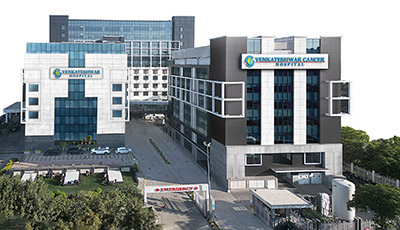
Venkateshwar Hospital for Cancer Treatment
Need Assistance?

We're here to help!
Feel free to get in touch with us
for any service or support.

+91-11-48-555-555

Contact Us

Frequently Asked Questions

1. What is the difference between gastric cancer and stomach ulcers?

Stomach ulcers are non-cancerous sores in the stomach lining, whereas gastric cancer is a malignant growth that can spread to other parts of the body.

2. What are the common diagnostic tests for gastric cancer?

Endoscopy with biopsy, CT scan, PET scan, and blood tests are the most common diagnostic tools.

3. Can gastric cancer be completely cured?

Early detection dramatically improves prognosis, and surgery combined with other treatments can potentially cure early-stage gastric cancer. Cure is not guaranteed, especially in advanced stages.

4. Who treats gastric cancer – gastroenterologist or oncologist?

A gastroenterologist helps in diagnosis, while oncologists (surgical, medical, and radiation) provide comprehensive cancer treatment.

5. What are the chances of survival after gastric cancer surgery?

Survival rates depend on the stage of cancer and overall health. Early-stage patients have significantly higher survival outcomes.

6. Is gastric cancer hereditary?

Yes, family history and inherited gene mutations may increase the risk of gastric cancer.

Our Medical Experts

Dr. Sunil Kumar Gupta

MBBS, MD, DM

Principal Director & HOD

Haemato Medical Oncology & Bone Marrow Transplant

Book an Appointment

Dr. Chitresh Yadav

MBBS, MD (Pathology), DM (Clinical Haematology)

Consultant

Haemato Oncology & Bone Marrow Transplant

Book an Appointment

Dr. Santosh Raut Kurmi

MBBS, MD, Fellowship (Haemato Oncology & BMT)

Consultant

Haemato Oncology & Bone Marrow Transplant

Book an Appointment

Dr. Shipra Gupta

MBBS, MD (MC Pant Gold Medalist), DNB, DrNB (Medical Oncology), ECMO Certified

Consultant

Medical Oncology

Book an Appointment

Dr. Manoj Kumar Sharma

MBBS, MD (Radiation Oncology), Fellowship in Proton Therapy (USA)

Director & Unit Head

Radiation Oncology

Book an Appointment

Dr. Kuldeep Sharma

MBBS, MD, DNB, PGDHHM

Director

Radiation Oncology, Brain Tumour Clinic

Book an Appointment

Dr. (Lt. Col) Aditya Pradhan

MBBS, MS, DNB

Principal Director

Urology, Uro-Oncology, Robotics & Renal Transplant

Book an Appointment

Dr. (Maj Gen) D V Singh

MBBS, MS, M.Ch (Urology)

Principal Director

Urology, Uro-Oncology, Robotics & Renal Transplant

Book an Appointment

Dr. Rohit Juneja

MBBS, MS (Gold Medallist), M.Ch

Sr. Consultant

Urology, Uro-Oncology, Robotics & Renal Transplant

Book an Appointment

Dr. Ashutosh Kumar

MBBS, MS, DrNB (Urology)

Associate Consultant

Urology, Uro-Oncology, Robotics & Renal Transplant

Book an Appointment

Dr. Hitesh Kumar Kundu

MBBS, DNB (Surgery), DrNB (Urology)

Associate Consultant

Urology, Uro-Oncology, Robotics & Renal Transplant

Book an Appointment

Dr. Pankaj Gupta

MBBS, MS (General Surgery), DrNB (Urology), FICRS

Consultant

Urology, Uro-Oncology, Robotics & Renal Transplant

Book an Appointment

Dr. Dinesh Chandra Katiyar

MBBS, MS, M.Ch

Director

Surgical Oncology & Robotic Surgery

Book an Appointment

Dr. Rudra Prasad Acharya

MBBS, MS, FAIS, FACS, FIAGES

Director

Surgical Oncology & Robotic Surgery

Book an Appointment

Dr. Pranav Mohan Singhal

MBBS, MS, M.Ch

Consultant

Surgical Oncology & Robotic Surgery

Book an Appointment

Dr. Shveta Tyagi Giri

MBBS, MS, Fellowship/Trainee in Gynae Oncology

Director

Gynae Oncology & Robotic Surgery

Book an Appointment

Dr. Puneet Dargan

MBBS, MS (General Surgery), Master’s (HPB Surgery), European Diploma (HPB Onco-Surgery)

Principal Director & Head

Liver Transplant, GI Surgery, GI Oncology & Robotics

Book an Appointment

Dr. Tanuja Mallik

MBBS (Gold Medalist), DNB (Anaesthesiology), MNAMS

Director & HOD

Liver Transplant Anaesthesia & Critical Care

Book an Appointment

Dr. (Gp Capt) Sumesh Kaistha

MBBS, MS, DNB (Gen. Surgery), FRCS (Glasg), FRCS (Eng), M.Ch (GI Surgery - AIIMS), MIPD Ed (Fellowship in HPB & Liver Transplantation), UK

Director

Liver Transplant & Robotics
GI Surgery, GI Oncology, Bariatrics & Robotic Surgery

Book an Appointment

Dr. Aditya Gupta

MBBS, MD (Paediatrics), DM (Paediatric Oncology)

Consultant

Paediatric Oncology

Book an Appointment

Related Blog

Related Conditions & Treatments

Designed and Developed By: Innovative Infonet Private Limited

Book an Appointment
Quick Query