To Book an Appointment Call Us +91-11-69-262-700

Cervical cancer develops in the cervix, the lower part of the uterus that connects to the vagina. It occurs when abnormal cells in the cervix grow uncontrollably, usually due to persistent infection with high-risk strains of the Human Papillomavirus (HPV).

Who is at High Risk of Cervical Cancer?

Several factors can increase a woman’s risk of developing cervical cancer. Recognising these risks helps guide preventive measures and timely screening:

  • Persistent HPV Infection: Persistent infection with high-risk HPV strains is the primary risk factor for cervical cancer.
  • Multiple Sexual Partners or Early Sexual Activity: Having multiple sexual partners or engaging in sexual activity at an early age increases the likelihood of HPV exposure.
  • Smoking or Tobacco Exposure: Smoking or exposure to tobacco can enhance HPV-related cellular changes, raising cancer risk.
  • Weakened Immunity: Conditions such as HIV, chronic illness, or immunosuppressive therapy weaken the immune system, allowing HPV infection to progress more easily.

Types of Cervical Cancer

Cervical cancer develops from different types of cells in the cervix. Understanding the type of cancer is important for treatment planning and prognosis.

1. Squamous Cell Carcinoma

Squamous cell carcinoma is the most common type of cervical cancer, accounting for approximately 70–80% of cases. It arises from the thin, flat squamous cells that line the outer surface of the cervix. These cancers often grow slowly and can be detected early through routine screening, which improves treatment outcomes.

2. Adenocarcinoma

Adenocarcinoma develops in the glandular cells of the cervical canal, which produce mucus. It represents around 20–25% of cervical cancer cases and may be harder to detect in the early stages because it forms higher up in the cervical canal. This type requires careful evaluation to plan effective treatment.

3. Other Rare Types

Other rare forms of cervical cancer include adenosquamous carcinoma, which contains both squamous and glandular cells, and small cell carcinoma, which is highly aggressive. These types account for a tiny proportion of cases but often require specialised treatment approaches due to their aggressive behaviour.

Symptoms of Cervical Cancer

Early cervical cancer often produces no noticeable symptoms, which is why regular screening is essential. Recognising warning signs early can lead to timely intervention and improved treatment outcomes.

  • Abnormal Vaginal Bleeding – This can occur after intercourse (post-coital), between periods (intermenstrual), or after menopause (post-menopausal).
  • Pelvic Pain or Discomfort During Intercourse – Pain may indicate tumour growth or inflammation in the cervical region.
  • Foul-Smelling Vaginal Discharge – Unusual or persistent discharge can be a warning sign of cervical abnormalities.
  • Advanced Stage Symptoms – In later stages, patients may experience weight loss, fatigue, leg swelling, and kidney problems due to tumour spread.

Causes of Cervical Cancer

Persistent infection with high-risk HPV strains is the primary cause of cervical cancer. While other factors may increase risk, they do not directly cause the disease. Understanding these contributing factors helps in prevention and early detection.

  • High-Risk HPV Infection – Persistent infection with high-risk Human Papillomavirus strains is the main driver of cervical cancer development.
  • Smoking – Tobacco use can enhance HPV-related cellular changes, slightly increasing cancer risk.
  • Long-Term Use of Oral Contraceptives – Extended use may modestly raise the risk but is not a direct cause.
  • Multiple Full-Term Pregnancies – Having several full-term pregnancies may slightly elevate risk.
  • Weakened Immunity – Conditions such as HIV, chronic illness, or immunosuppressive therapy can allow HPV infection to progress more easily.

Diagnosis and Tests for Cervical Cancer

Accurate diagnosis and staging are crucial for effective treatment. At Venkateshwar Hospitals, a combination of tests is used to detect and evaluate cervical cancer:

  • Pap smear test: Detects precancerous changes in cervical cells, allowing intervention before cancer develops.
  • HPV DNA test: Identifies high-risk HPV strains responsible for cervical cancer.
  • Colposcopy: A magnifying device is used to examine the cervix for abnormal areas. Any suspicious areas may require a biopsy.
  • Biopsy: Includes punch biopsy, endocervical curettage, or cone biopsy. This confirms the presence and type of cancer, guiding treatment planning.
  • Imaging tests (MRI, CT, PET scans): Evaluate the tumour’s extent and staging, including potential spread to lymph nodes or other organs. PET scans are used selectively for staging or in the treatment of recurrent disease.

These diagnostic tools enable a precise understanding of the cancer, allowing the medical team to design a personalised and effective treatment plan.

Treatment of Cervical Cancer

Cervical cancer treatment depends on the stage of the disease and the patient’s overall health. At Venkateshwar Hospitals, a multidisciplinary team plans and delivers the most appropriate care for each patient.

Early-Stage Cervical Cancer (FIGO I–IIA)

For early-stage cervical cancer, surgery is often the first-line treatment. Treatment options include:

  • Conization – Removal of a cone-shaped section of the cervix in very early cancers.
  • Hysterectomy – Surgical removal of the uterus and cervix, sometimes including surrounding tissues and lymph nodes, depending on tumour stage.
  • Precancerous Lesions (CIN2/3) – These may be treated with LEEP (Loop Electrosurgical Excision Procedure); however, LEEP is not used for established invasive cancer.

Advanced-Stage Cervical Cancer (FIGO IIB–IV)

Advanced cervical cancer often requires a combination of therapies to control tumour growth and spread:

  • Radiation Therapy – High-energy rays are used to destroy cancer cells, often combined with chemotherapy.
  • Chemotherapy – Drug-based treatment to shrink tumours and manage disease progression.
  • Targeted Therapy (Bevacizumab) – Reserved for recurrent, persistent, or metastatic cervical cancer and is not part of routine early-stage treatment.
  • Immunotherapy (e.g., pembrolizumab/Keytruda) – Indicated only for PD-L1-positive recurrent or metastatic disease, not all patients.

Complications of Cervical Cancer

Cervical cancer and its treatment may lead to complications such as infertility due to surgery or radiation, spread to nearby organs like the bladder or rectum, cancer recurrence, and emotional or psychological challenges. Holistic support is crucial in helping patients cope with these impacts.

Prevention of Cervical Cancer

Cervical cancer is largely preventable. Key preventive measures include:

  • HPV vaccination, ideally before sexual debut (ages 9–14), but effective up to 26–45 years in India
  • Regular Pap smear and HPV testing for early detection
  • Safe sexual practices, including condom use and limiting sexual partners
  • Avoiding smoking
  • Maintaining immunity through a healthy lifestyle and regular medical check-ups

Why Choose Venkateshwar Hospitals for Cervical Cancer in Delhi?

Venkateshwar Hospitals provides comprehensive and specialised care for cervical cancer, combining advanced technology with personalised patient support:

  • State-of-the-Art Oncology Department – Equipped with advanced diagnostic and treatment facilities.
  • Experienced Specialists – Gynecologic oncologists provide expert care, supported by multidisciplinary tumour boards.
  • Advanced Imaging – MRI and PET-CT ensure accurate staging and treatment planning.
  • Personalised Patient Care – Includes psychological counselling, nutrition guidance, and rehabilitation support.
  • Convenient Location – Easily accessible in Delhi with services for international patients.

Prognosis & Recovery|Cervical Cancer

Early-stage cervical cancer (FIGO I) has a 5-year survival rate of 80–95%, and timely diagnosis and treatment often result in long-term remission. In advanced stages, treatment requires ongoing management, and survival rates are lower. Regular follow-ups are essential for early detection of recurrence and for maintaining overall health, allowing patients to lead productive lives after treatment.
Get In Touch

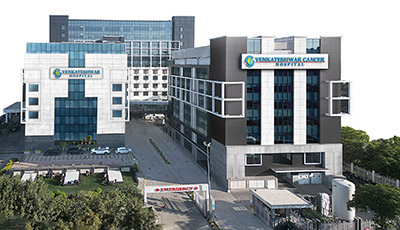
Venkateshwar Hospital for Cancer Treatment
Need Assistance?

We're here to help!
Feel free to get in touch with us
for any service or support.

+91-11-48-555-555

Contact Us

Frequently Asked Questions

1. What is the first sign of cervical cancer?

Abnormal vaginal bleeding is often the first noticeable sign, but screening can detect precancerous changes before symptoms appear.

2. How is cervical cancer diagnosed?

Diagnosis involves Pap smear, HPV DNA testing, colposcopy, biopsy, and imaging tests.

3. Which specialist treats cervical cancer?

A gynecologic oncologist diagnoses and manages cervical cancer.

4. Is cervical cancer curable if detected early?

Yes. Early-stage cervical cancer has a high cure rate with timely surgical or radiation-based treatment.

5. What are the common tests for detecting cervical cancer?

Pap smear, HPV DNA test, colposcopy, and biopsy are standard diagnostic tools.

6. Can HPV vaccination prevent cervical cancer?

Yes. HPV vaccination significantly reduces the risk by protecting against high-risk HPV strains, even in women up to 45 years old.


Our Medical Experts

Dr. Sunil Kumar Gupta

MBBS, MD, DM

Principal Director & HOD

Haemato Medical Oncology & Bone Marrow Transplant

Book an Appointment

Dr. Chitresh Yadav

MBBS, MD (Pathology), DM (Clinical Haematology)

Consultant

Haemato Oncology & Bone Marrow Transplant

Book an Appointment

Dr. Santosh Raut Kurmi

MBBS, MD, Fellowship (Haemato Oncology & BMT)

Consultant

Haemato Oncology & Bone Marrow Transplant

Book an Appointment

Dr. Kuldeep Sharma

MBBS, MD, DNB, PGDHHM

Director

Radiation Oncology, Brain Tumour Clinic

Book an Appointment

Dr. Deepika Chauhan

MBBS, DMRT, DNB

Sr. Consultant & Unit Head

Radiation Oncology, Brain Tumour Clinic

Book an Appointment

Dr. (Lt. Col) Aditya Pradhan

MBBS, MS, DNB

Principal Director

Urology, Uro-Oncology, Robotics & Renal Transplant

Book an Appointment

Dr. (Maj Gen) D V Singh

MBBS, MS, M.Ch (Urology)

Principal Director

Urology, Uro-Oncology, Robotics & Renal Transplant

Book an Appointment

Dr. Rohit Juneja

MBBS, MS (Gold Medallist), M.Ch

Sr. Consultant

Urology, Uro-Oncology, Robotics & Renal Transplant

Book an Appointment

Dr. Ashutosh Kumar

MBBS, MS, DrNB (Urology)

Associate Consultant

Urology, Uro-Oncology, Robotics & Renal Transplant

Book an Appointment

Dr. Hitesh Kumar Kundu

MBBS, DNB (Surgery), DrNB (Urology)

Associate Consultant

Urology, Uro-Oncology, Robotics & Renal Transplant

Book an Appointment

Dr. Dinesh Chandra Katiyar

MBBS, MS, M.Ch

Director

Surgical Oncology & Robotic Surgery

Book an Appointment

Dr. Rudra Prasad Acharya

MBBS, MS, FAIS, FACS, FIAGES

Director

Surgical Oncology & Robotic Surgery

Book an Appointment

Dr. Pranav Mohan Singhal

MBBS, MS, M.Ch

Consultant

Surgical Oncology & Robotic Surgery

Book an Appointment

Dr. Shveta Tyagi Giri

MBBS, MS, Fellowship/Trainee in Gynae Oncology

Director

Gynae Oncology & Robotic Surgery

Book an Appointment

Dr. Puneet Dargan

MBBS, MS (General Surgery), Master’s (HPB Surgery), European Diploma (HPB Onco-Surgery)

Principal Director & Head

Liver Transplant, GI Surgery, GI Oncology & Robotics

Book an Appointment

Dr. Tanuja Mallik

MBBS (Gold Medalist), DNB (Anaesthesiology), MNAMS

Director & HOD

Liver Transplant Anaesthesia & Critical Care

Book an Appointment

Dr. (Gp Capt) Sumesh Kaistha

MBBS, MS, DNB (Gen. Surgery), FRCS (Glasg), FRCS (Eng), M.Ch (GI Surgery - AIIMS), MIPD Ed (Fellowship in HPB & Liver Transplantation), UK

Director

Liver Transplant & Robotics
GI Surgery, GI Oncology, Bariatrics & Robotic Surgery

Book an Appointment

Dr. Aditya Gupta

MBBS, MD (Paediatrics), DM (Paediatric Oncology)

Consultant

Paediatric Oncology

Book an Appointment

Related Blog

Related Conditions & Treatments

Designed and Developed By: Innovative Infonet Private Limited

Book an Appointment
Quick Query