Prostate cancer is a type of cancer that develops in the prostate gland, a small walnut-shaped organ in men that produces seminal fluid, an essential part of the male reproductive system. It often grows slowly and may remain confined to the gland, but in some cases, it can become aggressive and spread to nearby tissues or bones.
Let’s understand everything about prostate cancer, including its causes, symptoms, diagnosis, treatment options, complications, prevention strategies, and why Venkateshwar Hospitals is a trusted choice in Delhi, along with answers to frequently asked questions.
Certain groups of men face higher risks of developing prostate cancer, such as:
Prostate cancer is not a single disease but can appear in different forms, each with its own characteristics, behaviour, and treatment approach. Understanding the type of prostate cancer is essential for accurate diagnosis and management. The main types include:
Symptoms of prostate cancer may not appear in the early stages. When they do, they may include:
The exact cause is not always known, but factors that may contribute include:
At Venkateshwar Hospitals, advanced diagnostic methods are available, such as:
Learn more about [Diagnostic Services at Venkateshwar Hospitals].
Prostate cancer, also known as prostatic carcinoma, adenocarcinoma of the prostate, or carcinoma of the prostate gland, is a condition that can be managed through a variety of treatment options depending on the stage and severity of the disease.
Surgery is a standard treatment, especially when the cancer is detected early. Radical prostatectomy, which involves removing the entire prostate gland, is often recommended. At Venkateshwar Hospitals, we offer minimally invasive and robotic-assisted surgical techniques, providing greater precision, reduced recovery time, and fewer complications.
Radiation therapy uses high-energy rays to destroy cancer cells. We provide both external beam radiation therapy, targeting the prostate from outside the body, and brachytherapy (internal radiation), where radioactive seeds are placed directly into the prostate to treat localised prostate cancer (prostatic carcinoma).
Hormone therapy works by lowering testosterone levels, which can slow the growth of tumours in adenocarcinoma of the prostate. This approach is particularly useful for advanced cases or when surgery and radiation are not suitable.
Chemotherapy involves anti-cancer drugs that target and destroy rapidly dividing cells. It is generally reserved for advanced or metastatic carcinoma of the prostate gland that has spread beyond the prostate.
For selected patients, Venkateshwar Hospitals offers innovative targeted therapy and immunotherapy, which either attack specific cancer cells or boost the body’s immune response to fight the disease effectively.
With advanced technology, experienced oncologists and personalised treatment plans, Venkateshwar Hospitals ensures that every patient receives care tailored to their condition, aiming for the best possible outcomes.
Prevention of Prostate CancerWhile prostate cancer cannot be prevented entirely, men can take several proactive steps to reduce their risk:
By adopting these lifestyle practices and staying vigilant about screening, men can take meaningful steps toward reducing their risk of prostate cancer and supporting long-term prostate health.
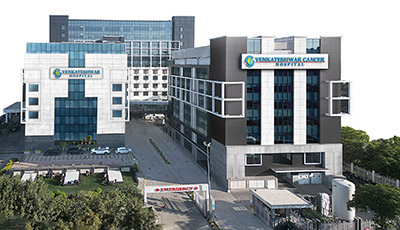
At Venkateshwar Hospitals, we prioritise personalised care and advanced treatment options to ensure the best outcomes for every patient. Our comprehensive approach addresses not only the cancer itself but also the patient's overall well-being.
We're here to help!
Feel free to get in touch with us
for any service or support.
The PSA blood test and Digital Rectal Exam (DRE) are the most common initial tests.
Men should begin regular screenings at age 50, or earlier if they have a family history or other risk factors.
Both may be involved. Urologists handle surgical aspects, while oncologists provide medical and radiation therapies.
Early-stage prostate cancer may have a high chance of successful treatment with surgery, radiation, or other therapies.
Common side effects include urinary incontinence, erectile dysfunction, fatigue, and bowel changes, which can be managed with supportive care.