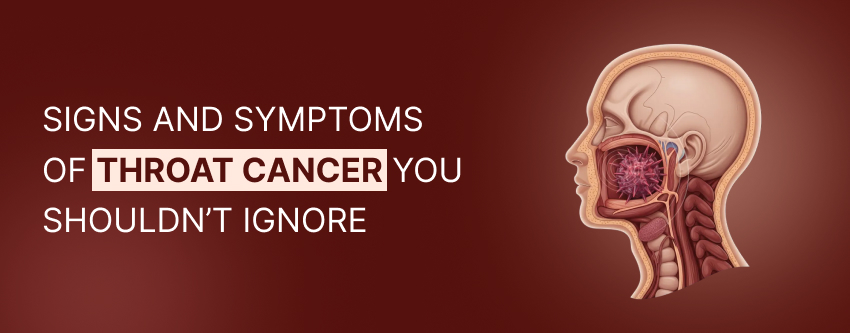
Throat cancer is a form of cancer that starts in the tissues of the throat. It can develop in the pharynx (the tube behind the mouth and nose) or the larynx (the voice box). These areas are important for breathing, speaking, and swallowing. When cancer grows here, it can affect these daily functions. It is a serious health concern, and in India, habits like tobacco use and heavy drinking increase the risk, making early detection and treatment vital.
While throat cancer can affect anyone, certain factors can significantly increase the risk of developing the condition. Being aware of these risks enables individuals to make healthier lifestyle choices and seek timely medical attention, which is crucial for early detection and improved outcomes.
Throat cancer is not a single disease but a group of cancers that develop in different parts of the throat. Understanding the specific type is important, as it helps determine the most suitable treatment approach and care plan. The main types include:
Throat cancer may not show noticeable signs in its early stages, but as the condition progresses, several symptoms can appear. Being aware of these warning signs can help in seeking timely medical attention.
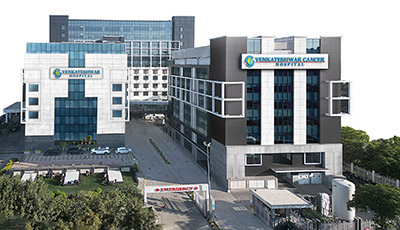
If you notice these symptoms, consult our ENT & Oncology experts at Venkateshwar Hospital, Delhi, for early diagnosis and care.
Throat cancer can develop due to a combination of lifestyle, environmental, and viral factors. Prolonged use of tobacco and alcohol, infection with certain strains of HPV (particularly 16 and 18), poor oral hygiene, and chronic irritation can increase the risk.
Conditions such as gastroesophageal reflux (GERD), a family history of cancer, or a genetic predisposition may also contribute. A diet low in fruits, vegetables, and antioxidants can further raise susceptibility. Understanding these causes is important for prevention and timely medical intervention.
Early diagnosis is crucial for enhancing treatment outcomes and improving survival rates. At Venkateshwar Hospital, we do the following tests to ensure accurate diagnosis.
Physical examination and medical history: Initial assessment to check symptoms and risk factors. Endoscopy: Visual examination of the throat, voice box, and surrounding structures. Imaging tests: CT scan, MRI, and PET scan used for tumour detection and staging. Biopsy: Confirms the presence and type of cancer cells. HPV testing: Determines the presence of HPV infection to help plan targeted therapy. Blood tests: Assess overall health and readiness for treatment.At Venkateshwar Hospital, throat cancer treatment is personalised to each individual, considering the type, stage, and overall health. A multidisciplinary team of specialists works together to provide coordinated, comprehensive care.
Surgery is often recommended to remove the tumour and any affected lymph nodes. In many cases, minimally invasive techniques, including advanced robotic-assisted surgery procedures, are used to reduce recovery time and preserve essential functions.
Radiation therapy is a key component of treatment and may be used alone or alongside other therapies. Techniques such as IMRT (Intensity-Modulated Radiation Therapy) allow precise targeting of cancer cells while sparing surrounding healthy tissues. External beam radiation is also used to treat affected areas effectively and control the disease locally.
Chemotherapy involves the use of powerful medications to destroy rapidly dividing cancer cells. It may be given on its own or combined with surgery and radiation to enhance treatment outcomes and reduce the risk of recurrence.
Targeted therapies are designed to specifically attack cancer cell pathways while minimising damage to healthy cells. These treatments are often used in combination with other approaches for more effective results.
Immunotherapy helps strengthen the body’s natural immune response so it can recognise and fight cancer more effectively. This treatment is particularly useful in advanced or recurrent cases.
Every patient’s treatment journey is guided by a team of specialists who collaborate to provide the most effective care. From diagnosis to recovery, the focus remains on personalised treatment, supportive care, and improving overall well-being.
Throat cancer can involve critical functions like speaking, swallowing, and breathing, making daily activities challenging. In other instances, the tumor can spread (metastasise) to adjacent lymph glands or lungs. Patients may also experience nutritional difficulties due to swallowing problems, alongside emotional and psychological impacts such as anxiety, stress, or lowered quality of life. Early identification and professional care can effectively mitigate such complications.
While throat cancer cannot be prevented entirely, proactive measures can significantly reduce the risk, especially for individuals at higher risk. Key strategies include:
Venkateshwar Hospital is a trusted centre for complete cancer care, offering the following advantages:
Throat cancer outcomes depend on timely detection and appropriate care. When diagnosed early, the chances of successful recovery are higher. Recovery and long-term results vary according to the stage of cancer. Regular follow-up and adopting healthy lifestyle practices play an important role in supporting recovery and overall well-being.
At Venkateshwar Hospital, our experienced team offers advanced and patient-focused treatment for throat cancer in Delhi. We combine cutting-edge technology, medical expertise, and personalised care to deliver the best possible outcomes.
We're here to help!
Feel free to get in touch with us
for any service or support.
Persistent sore throat, difficulty swallowing, hoarseness, and lumps in the neck are early warning signs.
Treatment is typically managed by oncologists, ENT specialists, and head & neck surgeons.
Endoscopy, imaging (including CT, MRI, and PET), biopsy, HPV testing, and blood tests are utilised.
Yes, especially if detected early. Treatment outcomes are best with a multidisciplinary approach.
Treatment duration depends on type, stage, and combination of therapies, ranging from weeks to several months.
Avoiding tobacco/alcohol, a balanced diet, HPV vaccination, and regular screenings can lower risk.