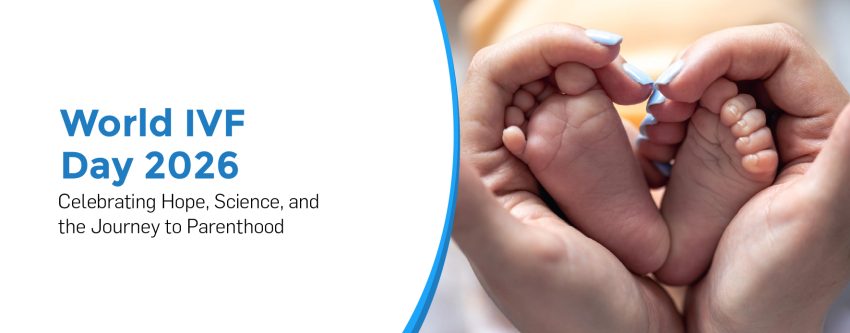
Every year, World IVF Day is observed on July 25 to commemorate one of the greatest milestones in reproductive medicine, the birth of the world’s first baby conceived through In Vitro Fertilisation (IVF). This day not only celebrates scientific innovation but also honours the resilience of millions of couples and individuals who pursue assisted reproductive treatments to build their families.
Infertility can be challenging for people emotionally and physically, but advancements in fertility care have made parenthood possible for many. IVF has become one of the most successful and widely accepted assisted reproductive technologies, offering renewed hope to people facing reproductive difficulties.
Understanding IVF
IVF is an assisted reproductive technique in which an egg is fertilised by sperm in a laboratory. Once the embryo is developed, it is transferred into the uterus to achieve pregnancy.
IVF is recommended for several fertility conditions, including:
- Blocked or damaged fallopian tubes
- Male infertility factors
- Ovulation disorders
- Endometriosis
- Unexplained infertility
- Genetic disorders requiring embryo screening
- Age-related decline in fertility
With continuous technological advancements, IVF continues to improve outcomes for hopeful parents worldwide.
Why World IVF Day Is Important
World IVF Day highlights the remarkable progress made in reproductive medicine while raising awareness about infertility, reducing stigma, and encouraging timely medical consultation. The day also recognises the dedication of fertility doctors, embryologists, nurses, and doctors who help so many families achieve their dream of becoming parents.
It serves as a reminder that infertility is a medical condition and that effective treatments are available for many couples.
The IVF Treatment Process
Understanding each stage of IVF helps patients feel more informed and confident throughout the journey.
1. Fertility Assessment
The treatment begins with detailed medical evaluations for both partners. Blood tests, hormone assessments, ultrasound scans, and semen analysis help doctors identify the underlying cause of infertility and develop an individualised treatment plan.
2. Ovarian Stimulation
Doctors prescribe fertility medications to stimulate the ovaries so that multiple mature eggs develop during a single menstrual cycle. Regular ultrasound monitoring and hormone tests help determine the ideal timing for the next stage.
3. Egg Collection
Once the follicles are mature, the doctor performs the egg retrieval procedure using ultrasound guidance under mild sedation. This process generally takes around 20–30 minutes.
The collected eggs are carefully examined in the laboratory before fertilisation.
4. Fertilisation
During this stage, healthy sperm are combined with the retrieved eggs in a specialised laboratory. Fertilisation occurs either naturally or through Intracytoplasmic Sperm Injection (ICSI), depending on the fertility condition.
5. Embryo Development
The fertilised eggs develop into embryos under controlled laboratory conditions. Embryologists monitor embryo quality over several days before selecting the healthiest embryo for transfer.
6. Embryo Transfer
The egg transfer procedure involves placing the selected embryo into the uterus using a thin catheter. This is a simple outpatient procedure; it does not require anaesthesia.
In some treatment plans, doctors recommend a frozen embryo transfer, where previously frozen embryos are thawed and transferred during a later menstrual cycle when uterine conditions are considered optimal.
7. Pregnancy Test
Approximately two weeks after embryo transfer, a blood test confirms whether implantation has occurred successfully.
Who May Benefit from IVF?
IVF may be suitable for individuals or couples experiencing:
- Long-term infertility
- Blocked fallopian tubes
- Severe male infertility
- Repeated pregnancy loss
- Ovulation disorders
- Endometriosis
- Unexplained infertility
- Advanced maternal age
- Previous unsuccessful fertility treatments
A fertility doctor recommends the most appropriate pregnancy treatment based on each patient’s medical history and diagnostic findings.
What Influences IVF Success?
Factors that contribute to treatment outcomes, including:
- Age of the woman
- Overall reproductive health
- Embryo quality
- Lifestyle habits
- Underlying medical conditions
- Experience of the fertility centre
People usually ask about the IVF success rate, but it varies from patient to patient. Younger women generally have higher success rates, although advances in reproductive medicine continue to improve outcomes across different age groups.
What Is the Best Age for IVF?
The most asked questions are about the best age for IVF. While successful pregnancies can occur at various ages, women below 35 years often experience higher success rates because egg quality and ovarian reserve tend to be better.
However, every fertility journey is unique, and personalised medical evaluation remains the best guide for treatment planning.
When Is the Best Time to Start IVF?
There is no universal answer regarding the best time for IVF. Doctors usually recommend beginning treatment once infertility has been appropriately evaluated and diagnosed. Early consultation can improve treatment options, especially for women whose fertility may decline with age.
Understanding IVF Costs
Financial planning is an important part of fertility treatment. Many couples search online for the IVF price before beginning their journey.
A common question is How much does IVF cost. The total expense depends on several factors, including medications, laboratory procedures, diagnostic investigations, embryo freezing, genetic testing, and the number of treatment cycles required. Consulting a fertility doctor provides a personalised estimate based on individual medical needs.
Choosing the Right Fertility Centre
Selecting an experienced fertility centre significantly influences the overall treatment experience. Patients should consider:
- Experienced fertility doctors
- Advanced embryology laboratory
- Modern diagnostic technology
- Ethical treatment practices
- Transparent counselling
- Personalised treatment plans
- Comprehensive reproductive care
For women who are seeking fertility care alongside comprehensive women’s health services, consulting the best gynaecologist hospital in Delhi can provide access to multidisciplinary expertise and advanced reproductive technologies.
Healthcare institutions such as Venkateshwar hospitals offer integrated women’s healthcare services supported by experienced doctors and modern medical infrastructure, ensuring good care throughout the fertility journey.
Conclusion
World IVF Day is more than a celebration of scientific achievement—it is a tribute to hope and perseverance for the countless families whose lives have been transformed through assisted reproductive technology. As awareness grows and fertility treatments continue to evolve, more individuals can access safe, evidence-based care that supports their dream of becoming parents.
Whether beginning fertility evaluation or considering IVF treatment, a timely consultation with experienced doctors remains one of the most important steps toward achieving a healthy pregnancy.
Frequently Asked Questions (FAQs)
What is World IVF Day?
World IVF Day is observed annually on July 25 to commemorate the birth of the world’s first IVF baby and raise awareness about infertility and assisted reproductive technologies.
Who should consider IVF treatment?
IVF may be recommended for couples experiencing blocked fallopian tubes, male infertility, ovulation disorders, endometriosis, unexplained infertility, or repeated unsuccessful fertility treatments.
Is IVF a painful procedure?
Most IVF procedures involve minimal discomfort. Egg retrieval is usually performed under sedation, while embryo transfer is generally painless.
How long does one IVF cycle take?
A complete IVF cycle typically takes about four to six weeks, depending on the individual’s treatment plan.
Can frozen embryos be used later?
Yes. Frozen embryos can be safely stored and transferred in future treatment cycles if recommended by the fertility specialist.
What factors affect IVF success?
Age, embryo quality, reproductive health, underlying medical conditions, lifestyle factors, and the expertise of the fertility centre all influence treatment outcomes.
Is IVF safe for both mother and baby?
IVF is considered a safe and well-established treatment when performed under the supervision of qualified fertility doctors.
Can IVF help with male infertility?
Yes. IVF, often combined with ICSI, can effectively treat many forms of male infertility.
How many IVF cycles may be required?
The number of cycles varies depending on age, fertility diagnosis, embryo quality, and individual response to treatment, generally 1 to 3 cycles.
When should couples consult a fertility specialist?
Couples who have been trying to conceive for one year (or six months if the woman is over 35 years of age) should seek evaluation from a fertility specialist.
Written & Verified By:

Dr. Preeti Tahilyani MBBS, MS (Obs. & Gynae)
Associate Director Obstetrics & Gynaecology, Laparoscopic & Robotic Surgery
Meet The Doctor