Introduction
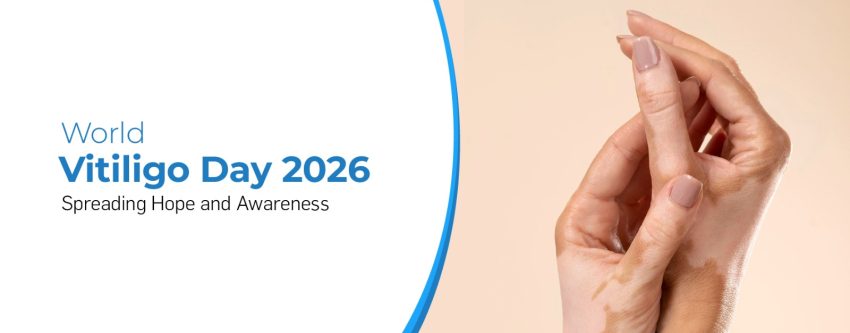
Vitiligo is a chronic autoimmune skin disorder characterised by the appearance of well-defined white patches on the skin due to loss of melanocytes, the cells responsible for producing skin pigment. Although vitiligo does not cause physical disability or pose a threat to life, its visible nature can significantly affect an individual’s confidence, emotional well-being, and quality of life.
Observed annually on 25 June, World Vitiligo Day aims to increase public awareness about vitiligo, promote early diagnosis and treatment, and address the misconceptions that continue to surround this condition.
Over the past decade, significant advances in our understanding of vitiligo have led to the development of more effective treatment strategies. Today, many patients can achieve disease stabilisation and meaningful repigmentation with appropriate medical care.
What is Vitiligo?
Vitiligo is an acquired pigmentary disorder in which melanocytes are selectively destroyed, resulting in depigmented white patches on the skin. The condition affects approximately 0.5-2% of the global population and can occur at any age, although Onset is commonly seen before the age of 30 years.
Vitiligo can involve any part of the body, including:
- Face
- Hands and feet
- Around the eyes and mouth
- Elbows and knees
- Genital region
- Scalp and body hair
In some individuals, hair within affected areas may also lose pigment and appear white.
The course of the disease varies considerably. Some patients experience slow progression over many years, while others may notice rapid spread over a shorter period.
Why Does Vitiligo Occur?
Current evidence suggests that vitiligo develops through a complex interaction of genetic susceptibility, immune dysregulation, and environmental triggers.
Autoimmune Mechanism
Vitiligo is now widely recognised as an autoimmune disease. The immune system mistakenly targets and destroys melanocytes, leading to pigment loss.
Genetic Factors
Approximately 15-20% of patients report a family history of vitiligo. However, most individuals with vitiligo do not have an affected relative.
Oxidative Stress
Research suggests that increased oxidative stress within melanocytes may contribute to cellular damage and initiate autoimmune responses.
Triggering Factors
Certain factors may precipitate or worsen vitiligo in susceptible individuals, including:
- Skin trauma or friction (Koebner phenomenon)
- Severe sunburn
- Emotional stress
- Exposure to specific chemicals
Importantly, these factors do not directly cause vitiligo but may act as triggers in genetically predisposed individuals.
Common Symptoms of Vitiligo
The hallmark feature of vitiligo is the appearance of sharply demarcated depigmented patches.
Patients may notice:
- White patches on the skin
- Enlargement of existing patches over time
- Premature greying of scalp hair
- Whitening of eyebrows, eyelashes, or beard hair
- Loss of pigment inside the mouth.
The condition is usually asymptomatic, although some patients may report mild itching before new lesions appear.
Common Myths and Facts About Vitiligo
Despite increasing awareness, several misconceptions continue to persist.
Myth: Vitiligo is contagious
Fact: Vitiligo cannot spread through touch, sharing food, physical contact, or living with an affected individual.
Myth: Vitiligo develops because of eating milk and fish together.
Fact: There is no scientific evidence supporting any dietary combination as a cause of vitiligo.
Myth: Vitiligo results from poor hygiene.
Fact: Personal hygiene has no role in the development of vitiligo.
Myth: Vitiligo is purely a cosmetic condition.
Fact: Although vitiligo primarily affects the skin, its impact on self-esteem, social interactions, and psychological well-being can be substantial.
Myth: Vitiligo cannot be treated.
Fact: While no universal cure currently exists, several effective treatment options can stabilise disease activity and promote repigmentation.
Modern Treatment Options for Vitiligo
Management is individualised and depends on factors such as disease activity, extent of involvement, patient age, and location of lesions.
Topical Therapies Topical medications remain the first-line treatment for many patients and may include:
- Corticosteroids
- Calcineurin inhibitors
- Topical Janus kinase (JAK) inhibitors in selected patients
These treatments help modulate the immune response and encourage repigmentation.
Narrowband UVB Phototherapy
Narrowband UVB (NB-UVB) phototherapy is considered one of the most effective treatments for generalised vitiligo.
Benefits include:
- Disease stabilisation
- Stimulation of melanocyte regeneration
- Improved repigmentation outcomes
Excimer Laser
Excimer laser provides targeted ultraviolet light therapy and is particularly useful for localised vitiligo involving cosmetically important areas such as the face.
Surgical Treatment
For patients with stable vitiligo that has not progressed for a prolonged period, surgical options may be considered.
These include:
- Melanocyte transplantation
- Epidermal grafting procedures
- Cellular grafting techniques
Careful patient selection is essential for achieving optimal results.
The Importance of Early Diagnosis and Treatment
One of the most important messages of World Vitiligo Day is that early medical evaluation matters.
Prompt assessment by a dermatologist for skin disorders can help:
- Confirm the diagnosis
- Identify disease activity
- Initiate appropriate treatment
- Prevent unnecessary delays
- Improve long-term treatment outcomes
Many patients postpone seeking medical advice because of myths, social stigma, or the misconception that treatment is ineffective. Early intervention often provides the best opportunity for disease control and repigmentation.
Living with Vitiligo
Successful management extends beyond medications alone.
Patients are encouraged to:
- Use broad-spectrum sunscreen regularly
- Avoid repeated skin trauma and friction
- Follow treatment plans consistently
- Maintain realistic expectations regarding treatment timelines
- Seek psychological support when required
With appropriate medical care and support, most individuals with vitiligo can lead healthy, active, and fulfilling lives.
A Message on World Vitiligo Day 2026
Vitiligo is a medical condition, not an infection, not a consequence of dietary habits, and certainly not a reason for social exclusion.
As we observe World Vitiligo Day, it is important to promote awareness, encourage early diagnosis, and challenge the myths that continue to surround this condition. Advances in dermatology have significantly improved our ability to manage vitiligo, offering hope to patients through evidence-based and increasingly targeted treatment approaches.
At Venkateshwar Hospital, we remain committed to providing comprehensive, patient-centred care for individuals living with vitiligo through accurate diagnosis, personalised treatment strategies, and long-term support.
Frequently Asked Questions (FAQ):
What is Vitiligo?
Vitiligo is a common skin disorder resulting in a loss of skin colour in the form of patches on different parts of the body.
Can Vitiligo be spread?
Vitiligo is not contagious; it is not something that can spread from person to person via touching.
Signs/Symptoms of Vitiligo:
The key symptom of vitiligo is white patches on the skin. Other signs include gray hair, prematurely whitened hair, or loss of colour in the tissue inside the mouth and nose (mucous membranes), and changes in the colour of the retina of the eye.
Will Vitiligo ever be cured permanently?
There is no cure for Vitiligo. However, treatments may help restore skin colour.
Why is sunscreen for vitiligo important?
Sunscreen for vitiligo helps protect the depigmented skin, which is very sensitive, from damage by the harmful rays of the sun and further pigmentation.
What is the best cream for vitiligo?
Topical corticosteroids and topical calcineurin inhibitors are among the best creams for vitiligo.
What is the treatment of white patches on the face?
Treatment of white patches on the face includes various methods like medicated cream, phototherapy, laser treatment, and cosmetic camouflage.
What is the best hospital for skin treatment in Delhi NCR?
Venkateshwar Hospital is the best option in Delhi NCR for treating skin conditions like vitiligo due to its advanced facilities and expert medical professionals.
Written & Verified By:
 Dr. (Maj.) Neha Akhoon Kaul MBBS, MD (Dermatology), MD (Pharmacology)
Consultant Dermatology & Aesthetics
Meet The Doctor