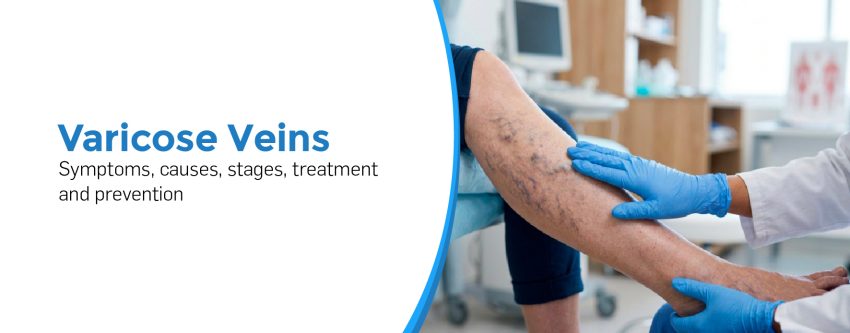
Varicose veins are enlarged, twisted veins that commonly develop in the legs. They occur when the valves inside the veins do not work properly, causing blood to pool instead of flowing efficiently back towards the heart. While they may initially appear as a cosmetic concern, some people can experience pain, swelling, heaviness and skin changes.
Understanding the symptoms, risk factors, stages and available treatments can help with timely medical evaluation and management.
What Are Varicose Veins?
Varicose veins are swollen and enlarged veins that become visible beneath the skin, usually in the legs. They may look blue, purple or dark and can appear twisted or rope-like.
Normally, one-way valves in the veins help blood travel towards the heart. If these valves become weak or damaged, blood can flow backwards and accumulate in the veins. This condition is known as venous insufficiency and can contribute to the development of varicose veins.
Varicose Veins Causes
Several factors can increase the risk of developing varicose veins, including:
- Age-related weakening of vein valves
- Family history of varicose veins
- Prolonged standing or sitting
- Pregnancy and hormonal changes
- Being overweight or obese
- Lack of physical activity
- Previous blood clots or vein problems
- Jobs that require standing for long periods
Early Signs of Varicose Veins
Recognising symptoms early can help people seek appropriate medical advice. Common symptoms include:
- Visible enlarged or twisted veins
- Aching or heaviness in the legs
- Swelling around the ankles or feet
- Burning, throbbing or cramping
- Itching around affected veins
- Leg discomfort that may worsen after prolonged standing
- Night-time leg cramps
Some people may have visible veins without significant symptoms, while others may experience considerable discomfort.
Varicose Veins Stages
Varicose veins can develop gradually, and symptoms may become more noticeable over time. The progression can broadly include:
Stage 1: Spider or Small Veins
Small, visible veins or spider veins may appear close to the surface of the skin. They may not cause significant symptoms.
Stage 2: Enlarged Varicose Veins
Veins become more prominent, twisted and swollen. Aching, heaviness or discomfort may develop.
Stage 3: Swelling and Skin Changes
Persistent swelling, particularly around the ankles, may occur. The skin may become dry, discoloured or irritated.
Stage 4: Advanced Skin Changes
Long-standing vein problems can cause significant skin changes, inflammation or thickening.
Stage 5: Healed Venous Ulcer
A previous venous ulcer may have healed but indicates advanced venous disease.
Stage 6: Active Venous Ulcer
An open ulcer can develop, usually around the lower leg or ankle, requiring medical treatment and wound care.
Not every person progresses through all these stages. Early assessment can help prevent complications.
Varicose Veins Diagnosis
A doctor usually begins with a physical examination and reviews the patient’s symptoms, medical history and risk factors. A Doppler ultrasound may be recommended to examine blood flow through the veins and identify abnormal blood reflux or blockages.
Additional tests may be advised depending on the patient’s symptoms and suspected underlying condition.
Varicose Veins Treatment Options
Treatment depends on the severity of the condition, symptoms and overall health. Common approaches include:
Lifestyle Changes
Regular walking, maintaining a healthy weight, avoiding prolonged standing or sitting and elevating the legs can help improve circulation and reduce symptoms.
Compression Therapy
Compression stockings may help improve blood flow and reduce swelling. They should be used according to medical advice, particularly if a person has other circulation problems.
Sclerotherapy
A specialist injects a solution into affected veins, causing them to close and gradually fade.
Endovenous Procedures
Minimally invasive techniques such as laser or radiofrequency treatment can close problematic veins. Blood is then redirected through healthier veins.
Surgical Treatment
In selected advanced cases, procedures such as vein ligation or removal may be considered.
The appropriate treatment should be determined after evaluation by a qualified vascular specialist.
When Should You See a Doctor for Varicose Veins?
You should seek medical evaluation if varicose veins cause persistent pain, swelling, skin changes, bleeding, recurrent cramps or difficulty walking. Medical attention is especially important if you develop a sudden increase in swelling or pain, warmth and redness in the leg, or an ulcer that does not heal.
Early assessment can help identify the severity of venous disease and determine suitable treatment.
Varicose Veins Prevention
While not all cases can be prevented, certain habits may lower the risk or reduce symptoms:
- Stay physically active and walk regularly.
- Avoid sitting or standing in one position for long periods.
- Maintain a healthy body weight.
- Elevate your legs when resting.
- Avoid crossing your legs for prolonged periods.
- Follow medical advice about compression stockings when recommended.
- Stay hydrated and maintain a balanced diet.
Who Is at Higher Risk?
The risk may increase with age, pregnancy, obesity, prolonged standing, family history and previous vein problems. People whose work requires them to remain standing or sitting for several hours may also be more likely to develop symptoms.
Can Varicose Veins Lead to Complications?
Many cases are mild, but untreated venous disease can sometimes lead to complications such as skin discolouration, inflammation, bleeding, blood clots or venous ulcers. Persistent or worsening symptoms should therefore be assessed by a healthcare professional.
Why Choose Venkateshwar Hospital for Varicose Veins Care?
Venkateshwar Hospital provides specialist evaluation and treatment for a range of vascular conditions. Patients can undergo appropriate clinical assessment and investigations to understand the cause and severity of their vein problems and discuss suitable treatment options with specialists.
For patients looking for Varicose veins treatment in Dwarka, Delhi, timely consultation can help determine whether lifestyle measures, compression therapy, minimally invasive procedures or other treatments are appropriate.
Conclusion
Varicose veins are common and can range from mild visible veins to advanced venous disease with swelling and skin changes. Recognising symptoms early and obtaining an appropriate evaluation can help prevent complications and improve quality of life. If you notice persistent or worsening symptoms, consult a vascular specialist for personalised advice and treatment.
Frequently Asked Questions
What are the most common symptoms of varicose veins?
Common symptoms include visible twisted veins, leg pain, heaviness, swelling, itching, burning sensations and muscle cramps.
Are varicose veins dangerous?
Most varicose veins are not immediately dangerous, but advanced venous disease can cause complications such as skin changes, ulcers, bleeding or blood clots.
Can varicose veins go away on their own?
Varicose veins generally do not disappear on their own. Lifestyle changes may reduce symptoms, while medical procedures may be required for problematic veins.
Can exercise help with varicose veins?
Yes. Activities such as walking can support healthy blood circulation and may help reduce symptoms. High-impact activities should be discussed with a doctor if they cause discomfort.
Can varicose veins be prevented?
Some risk factors cannot be controlled, but regular physical activity, maintaining a healthy weight, avoiding prolonged sitting or standing and elevating the legs may help reduce the risk.
What is the best treatment for varicose veins?
There is no single treatment that is best for everyone. Treatment depends on the severity, symptoms, vein anatomy and overall health of the patient.
When should you see a doctor for varicose veins?
Consult a doctor if you have persistent pain, swelling, skin changes, bleeding, ulcers or symptoms that are getting worse. Sudden leg swelling or severe pain requires prompt medical assessment.
Is surgery always required for varicose veins?
No. Many patients can be managed with lifestyle measures, compression therapy or minimally invasive procedures. Surgery is considered only in selected cases.
What happens if varicose veins are left untreated?
Some remain stable, while others may gradually worsen and cause swelling, skin changes, inflammation, bleeding or ulcers. Early evaluation can help manage the condition appropriately.
Which doctor treats varicose veins?
A vascular surgeon or other qualified vascular specialist can evaluate varicose veins and recommend appropriate treatment. Patients searching for the Best doctor for varicose veins treatment in Delhi should consider the specialist’s experience, diagnostic facilities and available treatment options.
Written & Verified By:
Dr. Rupesh Kaushik MBBS, MD (Gen. Med.), DM (Cardiology), PDF, FSCAI
Associate Director Cardiology
Meet The Doctor