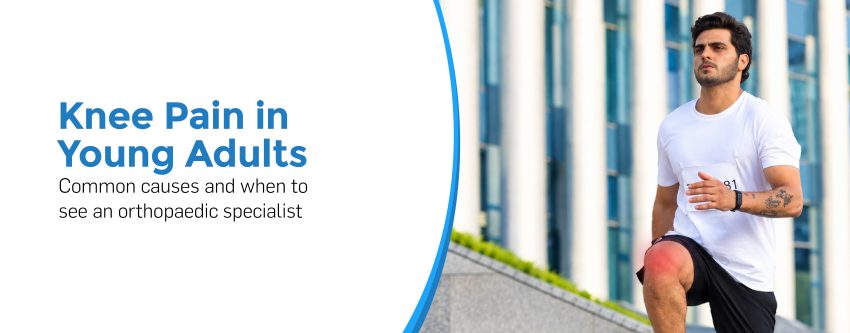
Knee pain is often associated with ageing, but it can affect young adults too. Active lifestyles, sports, sudden injuries, prolonged sitting, muscle imbalance and repetitive movements can all contribute to discomfort around the knee. Persistent pain should not be ignored, particularly when it interferes with walking, exercise, work or daily activities.
Understanding the possible causes and recognising when professional evaluation is needed can help prevent a minor knee problem from becoming a long-term issue.
What Causes Knee Pain in Young Adults?
There are several Knee pain Causes, ranging from temporary strain to injuries involving the ligaments, cartilage or kneecap.
- Sports and Physical Activity
Running, jumping, football, basketball, gym workouts and other high-impact activities can put repeated stress on the knee. Sudden increases in exercise intensity or exercising without adequate warm-up may also contribute to pain.
A Sports injury can involve muscles, tendons, ligaments or cartilage and may require assessment depending on its severity.
- ACL Injury
An ACL injury can occur during sudden changes in direction, awkward landings, rapid stopping or contact during sports. A popping sensation, swelling, instability and difficulty bearing weight may occur following an ACL injury. Diagnosis generally involves a physical examination and, when appropriate, imaging such as MRI to identify the injury and associated damage.
- Patellofemoral Pain
Pain around or behind the kneecap may develop when the patella does not move smoothly during activities such as running, climbing stairs, squatting or prolonged sitting. Muscle weakness or imbalance around the hip and thigh may contribute to this problem.
- Meniscus Injuries
The menisci act as shock absorbers inside the knee. Twisting, pivoting, cutting movements or squatting can cause a meniscal tear. Symptoms may include pain, swelling, clicking or difficulty fully moving the knee.
- Tendon Problems
Repeated jumping, running, or other activities can place stress on the tendons around the knee. This may lead to pain that becomes more noticeable during physical activity.
- Muscle Weakness or Imbalance
Weakness in the quadriceps, hamstrings, glutes or other supporting muscles can affect how the knee moves. Poor movement mechanics may gradually increase stress on the joint.
- Previous Injuries
A previous knee injury can sometimes cause ongoing instability, stiffness or altered movement patterns. Returning to sports or strenuous exercise before adequate rehabilitation may increase the risk of recurring symptoms.
Knee Pain Symptoms You Should Not Ignore
The Knee pain symptoms can vary depending on the underlying problem. They may include:
- Pain during walking, running or climbing stairs
- Swelling around the knee
- Stiffness or restricted movement
- Clicking or locking of the knee
- A feeling that the knee may give way
- Pain after exercise
- Difficulty putting weight on the affected leg
- Sudden pain following a twist, fall or impact
A sudden popping sensation followed by swelling, instability or difficulty bearing weight can be associated with an ACL injury and should be medically evaluated.
Warning Signs That Need Orthopaedic Evaluation
Some Warning signs of knee problems should prompt you to consult an orthopaedic specialist rather than continuing to exercise through the pain.
Seek medical attention if:
- Pain persists or keeps returning
- The knee becomes significantly swollen
- You cannot fully bend or straighten the knee
- The knee locks or repeatedly gives way
- You cannot comfortably put weight on the leg
- Pain starts after a significant injury
- You experience a popping sensation during an injury
- Knee pain is affecting sports, work or everyday activities
Early evaluation can help identify whether the problem involves a ligament, meniscus, tendon, cartilage or another structure.
How Is Knee Pain Diagnosed?
An orthopaedic specialist usually begins with a detailed medical history and physical examination. The doctor may assess knee movement, stability, swelling, tenderness and muscle strength.
Depending on the suspected condition, investigations may include:
- X-rays
- MRI
- Ultrasound in selected cases
- Other diagnostic tests when required
For suspected ACL injuries, clinical examination is important, while MRI may help confirm the injury and detect associated damage to the meniscus, cartilage or other ligaments.
Knee Pain Treatment Options
The appropriate Knee pain treatment depends on the cause, severity of symptoms, age, activity level and overall knee health.
Depending on the diagnosis, treatment may include:
Rest and Activity Modification
Temporarily reducing activities that worsen pain can allow the affected tissues to recover.
Physiotherapy
A structured rehabilitation programme can help improve flexibility, strength, balance and movement patterns.
Medicines
Doctors may recommend appropriate pain-relieving or anti-inflammatory medicines when required.
Bracing or Support
In selected injuries, a brace or other support may be recommended to provide stability during recovery.
Surgical Treatment
Some significant ligament, meniscus or cartilage injuries may require surgery. For example, treatment decisions for ACL injuries depend on knee stability, activity requirements, associated injuries and individual circumstances.
Does Knee Pain in Young People Mean Knee Replacement Is Needed?
Usually, knee pain in young people is more commonly associated with injuries, overuse, muscle imbalance or other treatable conditions rather than age-related joint degeneration.
Knee replacement is generally considered when there is significant joint damage, and symptoms cannot be adequately controlled with appropriate non-surgical treatment. The procedure replaces damaged joint surfaces with implants and is primarily used for advanced arthritis or severe joint damage.
Therefore, young adults with knee pain should not assume that replacement surgery is necessary without a proper diagnosis.
When Should You See an Orthopaedic Specialist?
You should consider an orthopaedic consultation when knee pain is persistent, recurrent, worsening or associated with swelling, instability, locking or restricted movement.
An evaluation is particularly important after a significant sports injury or when you hear a pop and subsequently develop swelling or difficulty bearing weight.
For individuals looking for a Best Orthopaedic doctor in Delhi, choosing a specialist experienced in diagnosing sports injuries, ligament problems, cartilage conditions and other knee disorders can help ensure appropriate treatment.
Choosing the Right Knee Care Centre
A specialised orthopaedic centre can provide evaluation, imaging, physiotherapy, rehabilitation and surgical care when required. A Knee treatment hospital in Delhi may offer multidisciplinary support for patients with different types of knee conditions.
At Venkateshwar Hospital, patients can receive orthopaedic evaluation and treatment based on their individual condition, symptoms and functional requirements. The focus should be on identifying the underlying problem and choosing the least invasive effective treatment whenever appropriate.
For patients with severe arthritis or advanced joint damage who eventually require replacement surgery, selecting an experienced the best knee replacement surgeon in Delhi and an appropriately equipped centre is important. A Best knee replacement hospital in Delhi should provide comprehensive assessment, surgical expertise and post-operative rehabilitation.
How Can Young Adults Protect Their Knees?
Simple habits can help reduce unnecessary stress on the knees:
- Warm up before exercising.
- Increase exercise intensity gradually.
- Strengthen the muscles around the hips and knees.
- Maintain proper technique during workouts.
- Use appropriate footwear.
- Avoid repeatedly exercising through significant pain.
- Follow rehabilitation instructions after an injury.
- Maintain a healthy body weight.
- Take adequate recovery time between intense workouts.
Conclusion
Knee pain in young adults should not automatically be considered a normal consequence of an active lifestyle. Injuries, overuse, muscle imbalance and problems involving ligaments, menisci or tendons can all cause symptoms. Identifying the underlying cause early can help guide appropriate treatment and support a safe return to normal activities.
If knee pain persists, keeps returning or occurs with swelling, instability, locking or significant injury, consult an orthopaedic specialist for proper evaluation rather than self-treating for an extended period.
Frequently Asked Questions
Is knee pain normal in young adults?
Occasional discomfort after strenuous activity may occur, but persistent or recurrent pain should be evaluated to determine the underlying cause.
Can exercise cause knee pain?
Yes. Repetitive movements, sudden increases in exercise intensity, improper technique and sports injuries can contribute to knee pain.
When should I see an orthopaedic doctor for knee pain?
Consult an orthopaedic doctor if pain persists, worsens, limits movement, causes swelling or instability, or follows a significant injury.
Can an ACL injury heal without surgery?
Some ACL injuries may be managed without surgery depending on knee stability, activity level and associated injuries. Active individuals with significant instability may require reconstruction.
Is knee replacement common in young adults?
No. Knee replacement is generally reserved for substantial joint damage and severe symptoms that have not responded adequately to other treatments. The treatment decision depends on individual circumstances.
Can physiotherapy help with knee pain?
Physiotherapy can help improve strength, flexibility, movement control and function for many knee conditions. The exercises should be selected according to the specific diagnosis.
Should I continue exercising if my knee hurts?
It is better to modify or stop activities that worsen significant pain until the cause has been assessed, particularly if pain follows an injury or is accompanied by swelling or instability.
Can knee pain be prevented?
Not every knee problem can be prevented, but appropriate warm-ups, strength training, correct exercise technique, suitable footwear and gradual progression of physical activity can reduce injury risk.
Written & Verified By:

Dr. Vibhore Singhal
MBBS, MS
Director
Joint Replacement, Robotics & Orthopedics
Meet The Doctor