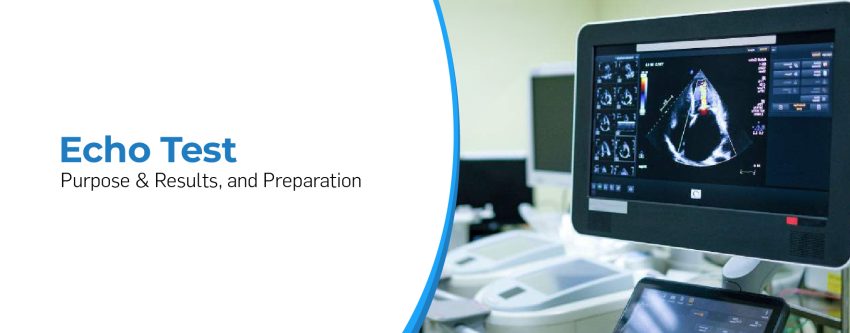
The heart plays a central role in maintaining the body’s health, and regular evaluation is important for detecting problems early. An Echo Test is a safe, non-invasive test used to assess how well the heart is functioning. It uses sound waves to create clear images of valvular stenosis or vegetation of the heart, helping doctors assess its structure, pumping efficiency, and blood flow.
Venkateshwar Hospital offers accurate, reliable echocardiography with advanced cardiac imaging systems, ensuring patient comfort and reliable results.
What Is an Echo Test (Echocardiogram)?
Before undergoing the test, it helps to understand what it involves. An Echo Test, or Echocardiogram, is an ultrasound-based imaging procedure that shows your heart’s movement and function in real time. It allows doctors to examine the heart’s chambers, valves, and blood flow patterns. Because the test does not involve radiation, it is completely safe and suitable for repeated use when monitoring ongoing heart conditions.
Doctors usually recommend a 2D Echo or similar test if you have symptoms such as chest discomfort, palpitations, breathing difficulty, fatigue, or swelling of lower limbs, etc.
Types of Echo Test Performed at Venkateshwar Hospital
Different heart conditions require different imaging modalities. Venkateshwar Hospital offers a full range of echo ultrasound testing, ensuring each patient receives the most accurate and appropriate assessment.
1. Transthoracic Echocardiogram (TTE)
A TTE is the most common type of Echo Test. A small probe is placed on the chest to capture clear ultrasound images. It is painless, quick, and usually the first investigation recommended for most heart symptoms. It can be 2d Echo or 3d echo, where three dimension assessment of the complex cardiac structure is done
2. Transoesophageal Echocardiogram (TEE)
A TEE offers highly detailed views of the heart by placing a probe through the throat and food pipe into the oesophagus. It is especially useful for diagnosing valve disorders, infections, or conditions not easily visible through a standard TTE.
3. Stress Echocardiogram
A Stress Echo checks how the heart performs during exercise or pharmacologically induced stress. It helps in detecting blockages in the coronary arteries and assessing overall heart stamina.
4. Doppler Echocardiogram
A Doppler Echo measures the speed and direction of blood flow inside the heart. It helps diagnose valve leakage, narrowed valves, and abnormal blood pressure within heart chambers.
5. 3D Echocardiogram
A 3D Echocardiogram produces high-resolution, three-dimensional images. It is beneficial in evaluating complex valve problems and congenital (birth-related) heart conditions.
Who Needs an Echo Test?
An Echo Test, also known as a heart ultrasound, is recommended for many heart-related symptoms and conditions. Your doctor may advise an Echo Test in Delhi if you have:
- Chest pain
- Shortness of breath
- Palpitations or irregular heartbeat
- Swelling in the legs or ankles
- A known heart murmur or valve problem
It also helps diagnose or monitor:
- Coronary artery disease
- Heart failure
- Cardiomyopathy
- Congenital heart defects
- Valve stenosis or leakage
People preparing for major surgery may also undergo a 2D Echo or TTE to ensure the heart is functioning well.
Preparation for an Echo Test
Preparing for the test depends on the type of echo being performed. Most tests, including the 2D Echo and TTE, require no special preparation. You can eat, drink, and take your regular medicines as usual. However:
- A TEE usually requires fasting for 4–6 hours.
- A Stress Echo may require the stoppage of certain drugs that affect heart rate for 48 hours
You should inform your doctor about any medications you are taking. Your cardiologist at Venkateshwar Hospital will guide you through the exact steps based on your test.
Procedure Steps of an Echo Test
Knowing what happens during the test can make the experience more comfortable.
The Echo Test follows a simple and patient-friendly process:
Before the Test:
You will lie comfortably on an examination bed.
During the Test:
A cool gel is applied to your chest, and a probe (transducer) is moved gently across the skin to capture ultrasound images. Whether it is a Doppler Echo, 2D Echo, or 3D Echocardiogram, the experience is painless. The test takes about 10–15 minutes.
After the Test:
You can resume your daily activities immediately. A cardiologist examines the results and discusses the findings with you.
Recovery After the Echo Test
Recovery is quick and straightforward for all echo tests. Patients undergoing a TTE or standard 2D Echo can return to regular activities right away. All procedures at Venkateshwar Hospital are performed with patient safety and comfort as top priorities.
Benefits of the Echo Test at Venkateshwar Hospitals
Echo tests offer several significant diagnostic advantages.
Key benefits include:
- Non-invasive and painless procedure
- Accurate assessment of heart structure and blood flow
- Early detection of conditions such as valve disease and heart failure
- Reliable monitoring of treatment progress
- Advanced imaging performed by experienced cardiologists
Possible Risks of an Echo Test
Although echo tests are considered exceptionally safe, it is helpful for patients to understand the potential risks.
Key points include:
- There are no significant risks associated with 2D Echo, Doppler Echo, 3D Echocardiogram, or Transthoracic Echocardiogram (TTE).
- These tests are non-invasive, painless, and well-tolerated by patients of all ages.
- In rare cases, a Transoesophageal Echocardiogram (TEE) may cause mild throat discomfort during probe insertion.
All echo procedures at Venkateshwar Hospital are performed under expert supervision to ensure patient safety and comfort.
Why Choose Venkateshwar Hospitals for an Echo Test in Delhi?
Choosing a reliable hospital ensures accurate results and personalised care. Venkateshwar Hospital offers:
- NABH-accredited, multispecialty cardiac services
- Advanced imaging technology for precise evaluation
- Highly experienced cardiologists
- Comprehensive care from diagnosis to treatment
- Safe, comfortable, and non-invasive procedures
- 24/7 cardiac emergency services
Outlook
An Echo Test is a vital tool for diagnosing heart problems early and planning effective treatment. Regular assessments, whether through 2D Echo, Doppler Echo, or 3D Echocardiogram, help maintain long-term heart health and diagnose heart disease early.
At Venkateshwar Hospital, we are committed to providing trusted, high-quality cardiac care with a focus on accuracy, safety, and patient well-being.
FAQs
Who performs the test?
An echocardiogram is performed by trained cardiac sonographers or echocardiographers using specialised ultrasound equipment. In some cases, a cardiologist or clinically trained echocardiographer may carry out the test, particularly in hospital settings where detailed assessment and clinical interpretation are required to ensure accurate results.
What is the difference between 2D, 3D, and Doppler echo?
A 2D Echo provides flat, real-time images showing heart movement and structure. A 3D Echo creates detailed three-dimensional views for assessing complex conditions. A Doppler Echo measures the speed and direction of blood flow and is often combined with 2D or 3D imaging for a complete evaluation.
Is it painful?
No, an echocardiogram is not painful. You may feel slight pressure from the probe on your chest, but the procedure is non-invasive and uses safe ultrasound waves. Most patients find it comfortable and experience no discomfort during or after the test.
Any preparation needed?
Most transthoracic echocardiograms require no special preparation. Patients should avoid applying lotions or oils to the chest area. For a transoesophageal echocardiogram, fasting for 3-4 hours may be needed, and a local anaesthetic or mild sedation is often administered for comfort.
Why do doctors recommend an echo test before heart surgery?
Doctors recommend an echo before heart surgery to assess the heart’s chambers, valves, and overall function. It helps identify any underlying issues, evaluate surgical risks, and guide precise planning. The detailed information it provides supports safer procedures and better surgical outcomes.
Is an echo test safe for pregnant women?
Yes, an echocardiogram is completely safe during pregnancy because it uses ultrasound waves rather than radiation. It poses no risk to the mother or the baby. When necessary, a specialised fetal echocardiogram may also be performed to assess the baby’s heart development.
Written & Verified By:
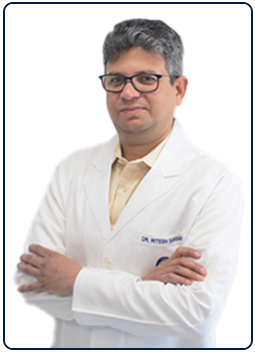
Dr. Ritesh Sanguri (MBBS, MD, DM)
Associate Director Cardiology
Meet The Doctor