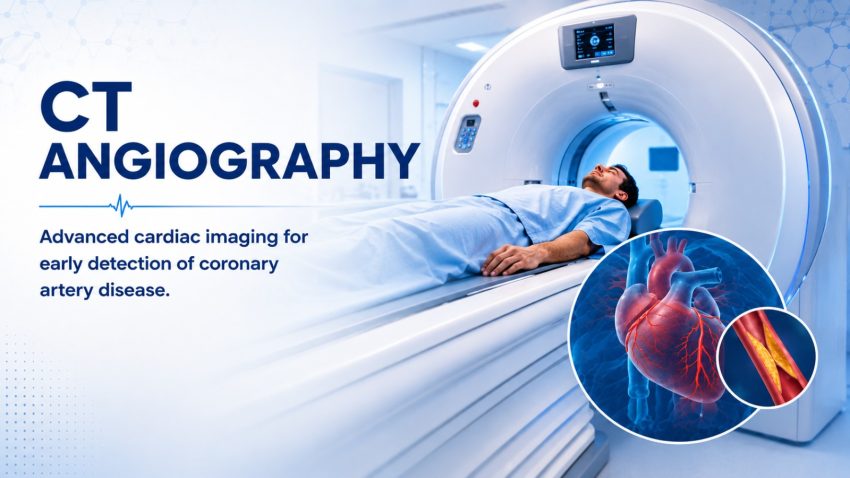
CT Angiography (CTA) is a non-invasive imaging test that uses advanced CT technology to create clear, detailed images of blood vessels. It helps doctors study the arteries in the heart, brain, lungs, kidneys, and limbs to understand how well blood is flowing through them.
Doctors recommend this test when symptoms or prior screening results suggest a possible circulatory issue. CTA helps detect blocked or narrowed arteries, blood clots, aneurysms, or other abnormalities that may lead to heart disease, stroke, or vascular complications. Because it provides quick and accurate results, CTA plays an essential role in early diagnosis and helps guide timely treatment decisions.
At Venkateshwar Hospital, CT Angiography is performed using high-speed scanners that produce precise images within minutes. This supports specialists in evaluating a wide range of cardiovascular and vascular conditions with clarity and confidence.
Types of CT Angiography Test
CT Angiography can assess blood vessels throughout the body. Common types include:
1. Coronary CT Angiography
This procedure evaluates the heart’s arteries to detect blockages or early signs of coronary artery disease.
2. Cerebral CT Angiography
This examines brain blood vessels to identify aneurysms, clots, or stroke-related concerns.
3. Pulmonary CT Angiography
Helps detect pulmonary thromboembolism, a serious blockage of the lung arteries.
4. Peripheral CT Angiography
The procedure assesses blood flow in the arms and legs to diagnose peripheral artery disease (PAD).
5. Renal CT Angiography
Reviews kidney blood vessels to identify narrowing or other vascular abnormalities.
When Do Doctors Recommend CT Angiography?
CT Vascular Imaging is recommended when a doctor needs a clearer view of blood vessels to confirm or rule out certain conditions. It is suitable for people with:
- Chest pain or suspected heart disease: Helps identify blocked arteries or reduced blood flow when cardiac symptoms occur.
- Stroke or aneurysm symptoms: Detects narrowed, blocked, or bulging vessels that may affect the brain’s blood supply.
- Possible pulmonary embolism: Identifies blood clots in the lungs when there is sudden breathlessness or chest discomfort, or D Dimer raised.
- Peripheral artery disease (PAD): Assesses narrowed arteries in the legs when symptoms such as pain, numbness, or poor circulation are present.
- Abnormal findings on ultrasound, ECG, or stress tests: Provides more precise imaging to help understand the cause of unusual results.
Not suitable for:
People with kidney concerns may not tolerate the contrast dye. Pregnant women should only undergo a CT Angiogram if advised.
How to Prepare for a CT Angiography?
Patients should follow these essential instructions before undergoing a CT angiography:
1. Fasting
Avoid solid food for 3 to 8 hours before the scan. Clear fluids may be allowed up to 2 hours prior, if advised. Caffeine should be avoided for at least 4 to 12 hours beforehand, as it can increase heart rate and compromise image quality.
2. Allergy Disclosure
Inform your doctor if you have an allergy to iodine-based contrast material used during Computed Tomography Angiography.
3. Medication Instructions
Patients taking metformin are generally advised to stop it 24 to 48 hours before and after the procedure, unless directed otherwise. This reduces the risk of lactic acidosis. Continue other medicines unless specifically instructed.
4. Clothing and Metal Removal
Wear comfortable clothing and remove all metallic items, including jewellery, dentures, hairpins and piercings. A hospital gown may be provided.
5. Heart Rate Control or Sedation
For coronary CT angiography, beta blockers may be administered to achieve a heart rate of around 60 bpm or lower for optimal imaging. Mild sedation may be used when necessary.
6. Blood Test
KFT is advised to check creatinine level is normal or not
What to Expect During an AFP Test?
Before the Procedure
- Complete the registration and consent process.
- Basic checks, such as heart rate and blood pressure, are done.
- An IV line is placed for the dye needed during CTA / CT Vascular Imaging
During the Procedure
- You will lie on a CT table that moves gently into the scanner.
- The special dye is used to make the blood vessels clearly visible.
- The scanner takes detailed images of the heart and blood vessels.
- The scan is painless and usually takes around 30 to 40 minutes.
After the Procedure
- You will be monitored briefly to ensure you feel comfortable after the dye.
- Drinking plenty of water helps your body flush the dye.
- Most people can return to their routine within a few hours.
- A radiologist studies the images and sends the report to your doctor.
Post Test Recovery
- Most people can return to their usual activities soon after CT Angiography.
Drink plenty of water over the next 24 hours to help your body clear the dye. - Let your doctor know if you notice symptoms such as itching, a rash, dizziness, nausea, or loose stool.
- Plan a follow-up visit with your doctor to review the results and next steps.
Benefits of the Procedure
- A non-invasive test that is considered an alternative test.
- Helps identify blockages, clots, calcium score, or other vascular concerns with high accuracy.
- Supports early diagnosis, which allows quicker treatment planning and better outcomes.
- Provides detailed 3D images that give doctors a clear view of blood vessels.
- Does not require hospital admission, and recovery time is usually very short.
Post Test Complications
- Some patients may experience a mild reaction to the contrast dye.
- There is a rare chance of temporary kidney strain from the dye.
- The test involves minimal radiation, which is further reduced with modern low-dose CT scanners.
Venkateshwar Hospital follows strict safety measures to support patient comfort and safety throughout the procedure.
Why Choose Venkateshwar Hospitals for CT Angiography in Delhi?
- NABH-accredited hospital in Dwarka offering high-quality cardiac care.
- Advanced imaging systems that deliver precise, accurate cocunoris evaluations.
- Experienced radiologists ensure precise reporting and careful assessment.
- Comprehensive heart care is available from diagnosis to treatment planning.
- A safe, comfortable, and non-invasive testing experience.
- Round-the-clock cardiac emergency support.
Outlook
CT Angiography is a reliable way to detect heart and vascular concerns at an early stage. Timely testing supports more precise diagnosis and helps doctors plan the proper treatment.
If you have symptoms or risk factors, it is helpful to speak with a specialist at Venkateshwar Hospital for proper assessment and guidance.
Frequently Asked Questions
1. Who performs CT Angiography?
CT Angiography is carried out by trained radiologists and technologists, with support from cardiac and vascular specialists at Venkateshwar Hospital.
2. How is CT Angiography different from traditional angiography?
CT Angiography is non-invasive and faster, while traditional angiography requires inserting a catheter into an artery to capture images. However. CT angiography has its limitations, and the patient is advised to undergo conventional invasive angiography in certain conditions, like a high calcium score, where it may not be accurate
3. Is CT Angiography painful?
CT Angiography is not painful. You may only feel a brief needle prick when the IV line is inserted.
5. Are there any risks or side effects?
Side effects are uncommon and usually mild. Some people may feel brief warmth when the dye is given or experience minor allergic reactions or gastric discomfort.
6. When will I get my results?
Most reports are ready the same day or within 24 hours at Venkateshwar Hospital.
Written & Verified By:
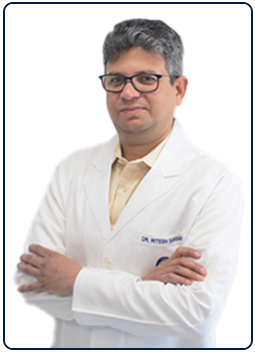
Dr. Ritesh Sanguri (MBBS, MD, DM)
Associate Director Cardiology
Meet The Doctor