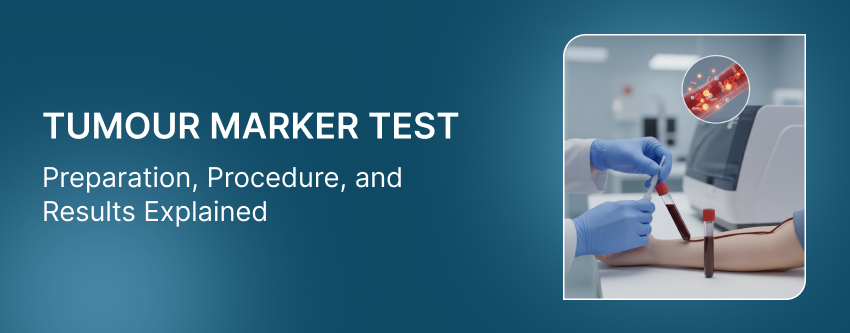
Understanding how cancers are detected and monitored has become easier with the support of advanced medical tests. One such tool is the Tumour Marker Test, which measures specific substances in the blood, urine, or tissue. These substances may be produced by cancer cells or by the body in response to cancer, and they offer helpful clues about what is happening inside the body.
In clinical practice, the Tumour Marker Test is used alongside imaging and biopsies, as it is not a standalone diagnostic test for cancer. It helps doctors track how well a treatment is working and monitor for any signs of the cancer returning. By offering timely and reliable information, these tests play an important role in effective cancer management.
What is a Tumour Marker Test?
A Tumour Marker Test measures specific substances in your body that may provide information about the presence, progression, or recurrence of cancer.
Primary Uses:
Tumour marker tests are commonly used for screening, supporting diagnosis, assessing prognosis, and monitoring treatment response over time.
Purpose:
The test helps healthcare providers:
- Detect cancer early.
- Plan appropriate treatment.
- Monitor how well the treatment is working.
- Check for possible recurrence after treatment.
Types of Tumour Markers:
- Protein-based markers: Produced by cancer cells (e.g., PSA, AFP, CEA).
- Genetic markers: DNA or gene mutations (e.g., BRCA1, BRCA2).
- Hormonal markers: Abnormal hormone production by tumours.
Since these substances can also be elevated in noncancerous conditions, results are always interpreted in combination with imaging and biopsy findings.
Common Types of Tumour Marker Tests
There are several types of tumour markers, each linked to specific cancers. The table below summarises some of the most common ones:
| Tumour Marker | Sample Type | Associated Cancer Type |
| CA 125 | Blood | Ovarian Cancer |
| CA 19-9 | Blood | Pancreatic, Gallbladder, and Bile Duct Cancers |
| CEA (Carcinoembryonic Antigen) | Blood | Colorectal and Lung Cancer |
| AFP (Alpha-fetoprotein) | Blood | Liver and Testicular Cancer |
| PSA (Prostate-specific Antigen) | Blood | Prostate Cancer |
| BRCA1 / BRCA2 | Blood / Saliva | Breast and Ovarian Cancer |
| LDH (Lactate Dehydrogenase) | Blood | Lymphoma, Melanoma |
| Thyroglobulin | Blood | Thyroid Cancer |
Each test provides specific insights depending on the suspected or existing type of cancer.
Why Tumour Marker Tests Are Done
Doctors recommend Tumour Marker Tests for various reasons depending on the patient’s symptoms, risk factors, or existing diagnosis. These include:
- Early Detection: To identify potential cancer before symptoms become apparent.
- Monitoring Treatment Effectiveness: To see how well chemotherapy, radiation, or surgery is working.
- Prognosis Prediction: To estimate how aggressive the cancer may be or how well a patient might respond to therapy.
- Recurrence Detection: To check if cancer has returned after successful treatment.
However, it is important to note that these tests are not used alone to confirm cancer. They support other diagnostic investigations.
Preparation for Tumour Marker Test
Preparation depends on the type of tumour marker being tested and the specimen required.
General Guidelines:
- Your doctor may advise fasting for 8–12 hours before a Tumour Marker Test, especially for blood-based assessments.
- Inform the healthcare provider about all medications, supplements, or ongoing treatments.
- Avoid alcohol and smoking for at least 24 hours before testing, as they can affect results.
- In some cases, you may be asked to schedule the test at a specific time of day for accurate comparison.
Common Myths:
- You do not need to stop eating before every test. Fasting is required only for specific tumour markers.
- A single abnormal result does not confirm cancer. Follow-up tests are always necessary.
Procedure of Tumour Marker Test
The Tumour Marker Test is simple and minimally invasive. The procedure may vary based on the sample type. At Venkateshwar Hospital, these steps are carried out in accordance with standard clinical protocols to ensure accuracy and patient comfort.
Step-by-Step Process:
1. Sample Collection:
- For blood tests, a small sample is drawn from a vein in the arm.
- For urine or stool tests, the patient provides samples in sterile containers.
- For tissue or bone marrow samples, a biopsy may be performed.
2. Duration:
- The blood collection takes about 5–10 minutes.
- Biopsy procedures may take longer and require local anaesthesia.
3. After the Test:
- Mild bruising or discomfort may occur at the blood collection site.
- Patients can resume normal activities immediately unless advised otherwise.
Understanding Tumour Marker Test Results
Results are typically reported as numerical values, compared to normal reference ranges.
Interpreting the Results:
- Normal Values: Usually suggest no abnormal marker activity, but further evaluation may be required depending on symptoms.
- High Tumour Marker Levels: May indicate cancer, recurrence, or metastasis. They may also rise due to inflammation, infection, or noncancerous conditions.
- Low or Decreasing Levels: Usually indicate that treatment is effective.
Factors Influencing Results:
- Ongoing medication or therapy.
- Liver or kidney function.
- Noncancerous conditions such as thyroid disorders, anaemia, or infections.
Only a doctor can accurately interpret results and decide whether additional imaging or biopsies are needed.
Limitations of Tumour Marker Tests
While tumour marker testing is a valuable tool, it has its limitations:
- Not all cancers have detectable markers. Some cancers may not release measurable substances.
- False Positives: Elevated markers may occur in noncancerous conditions.
- False Negatives: Early-stage cancers may not produce enough markers for detection.
- Need for Complementary Tests: Tumour marker results must be interpreted in conjunction with imaging, biopsy, and clinical evaluation.
Hence, the Tumour Marker Test should always be part of a broader diagnostic strategy.
Risks and Considerations
While the Tumour Marker Test is generally safe, it is important to be aware of a few potential risks and factors to consider.
Risks:
- Mild pain or bruising at the blood draw site.
- There is a very rare risk of infection if a biopsy is involved.
When to Consult a Doctor Immediately:
- Persistent pain or swelling at the test site.
- Unexplained fatigue, fever, or weight loss following abnormal test results.
These symptoms warrant prompt consultation for further evaluation and treatment planning.
Outlook
The Tumour Marker Test remains a helpful tool in cancer care, offering insights into early detection, treatment progress, and long-term monitoring. While it cannot diagnose cancer on its own, it adds value when combined with imaging, biopsies, and clinical evaluation. With timely follow-up and medical guidance, it supports more informed and personalised treatment decisions.
Frequently Asked Questions
1. What is the CA 125 test used for?
CA 125 helps in detecting and monitoring ovarian cancer. It can also be elevated in benign conditions like endometriosis, so results must be interpreted by a doctor.
2. How does the PSA test help in prostate cancer detection?
The PSA test measures prostate-specific antigen levels in the blood. Elevated PSA levels may indicate prostate inflammation or cancer.
3. What is the difference between a tumour marker test and a biopsy?
A tumour marker test measures cancer-related substances in blood or fluids, while a biopsy examines actual tissue samples under a microscope for cancer cells.
4. How do tumour markers help in monitoring chemotherapy?
Doctors use tumour marker levels to evaluate how effectively chemotherapy is working. A drop in marker levels often indicates a positive treatment response.
5. What does AFP indicate in liver cancer?
AFP (Alpha-fetoprotein) is commonly used to detect and monitor liver cancer. High levels may also appear in certain germ cell tumours.
6. What are some common tumour marker tests used in cancer diagnosis?
Common ones include CA 125, CA 19-9, PSA, AFP, CEA, and BRCA1/2 gene mutation tests.
7. Are there any risks associated with tumour marker tests?
Risks are minimal and mostly limited to mild bruising or temporary discomfort at the blood collection site.
Medically Reviewed by — Dr. Siddharth Sahai ( Director – Medical Oncology)