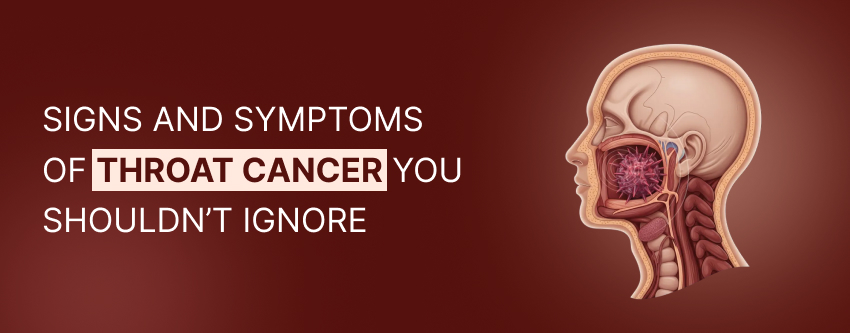
Throat cancer can often go unnoticed in its early stages, as its symptoms resemble everyday throat problems like infections or acid reflux. However, paying attention to persistent signs can make all the difference; early detection dramatically improves treatment outcomes and quality of life. Throat cancer isn’t a single disease but a group of cancers that can affect different parts of the throat, including the pharynx and larynx. At Venkateshwar Hospital, specialists emphasise the importance of recognising early warning signs to ensure timely diagnosis and care.
What is Throat Cancer?
Throat cancer is a malignant growth that develops in the tissues of the throat (pharynx) or the voice box (larynx). In simple terms, it means that cells in these regions begin to multiply abnormally and invade nearby areas. Two of the most common subtypes are pharyngeal cancer (which affects the throat behind the mouth) and laryngeal cancer (which affects the voice box). Recognising the warning signs is crucial because the throat houses vital structures for breathing, swallowing, and speech — the earlier treatment begins, the better the chances of preserving these functions.
Early Signs and Symptoms of Throat Cancer
Here are some of the early warning signs you should not ignore. Each is also common in less severe throat conditions, but when it persists or worsens, it warrants evaluation.
1. Persistent sore throat
A sore throat that lingers for more than a couple of weeks — without apparent cause or despite usual treatment — may signal something more serious than a simple infection. While a regular cold usually improves, a sore throat due to throat cancer tends not to resolve.
2. Difficulty swallowing (dysphagia)
Feeling as though food gets stuck, or having pain or a burning sensation while swallowing, may indicate tumour growth in the throat or near the oesophagus. This symptom often intensifies gradually and may prompt weight loss.
3. Voice changes/hoarseness
A change in voice quality — hoarseness, husky voice, or an unexplained softer or strained tone that lasts more than 3 weeks — is a red flag, especially for laryngeal (voice box) cancers.
4. Chronic cough or coughing up blood
A cough that persists beyond what you’d expect for a respiratory infection, or the presence of blood-tinged phlegm, should raise suspicion. Throat tumours may bleed or irritate the airway passages.
5. Unexplained weight loss
When swallowing becomes difficult or painful, intake drops — this, along with the increased energy demand of a cancerous process, can result in weight loss that isn’t intentional.
6. Lump in the neck or throat
Swelling or a firm lump in the neck (often an enlarged lymph node) that does not go away may indicate the spread of a throat tumour to the lymphatic system.
7. Ear pain or ringing
Sometimes, pain is referred to the ear (usually on one side), or there is an unexplained earache/ringing without an ear infection. The tumour may irritate nerves or structures near the ear.
If you notice any of the above symptoms persisting beyond two to three weeks, consult a specialist at Venkateshwar Hospital for a thorough evaluation.
Main Causes and Risk Factors of Throat Cancer
Throat cancer typically develops because of specific risk factors and exposures that increase the chance of cell changes. Commonly identified causes include:
- Tobacco use (smoking & chewing tobacco): The single most significant risk factor, tobacco irritates throat tissues and leads to abnormal cell changes.
- Excessive alcohol consumption: Alcohol acts synergistically with tobacco and can directly damage throat tissues.
- Human papillomavirus (HPV) infection: Certain HPV strains are linked to oropharyngeal cancers (a type of throat cancer) even in people without heavy tobacco use.
- Poor diet and nutrition: A diet low in fruits and vegetables, high in processed meats, may raise risk.
- Exposure to harmful chemicals: Long-term contact with carcinogens such as asbestos, formaldehyde, wood dust, or certain industrial chemicals may increase risk.
- Genetic predisposition: Family history of head and neck cancers can elevate an individual’s risk for throat cancer.
When to See a Doctor?
Suppose you notice any of the symptoms mentioned above, such as a persistent sore throat, hoarseness, or difficulty swallowing, and they last for more than two to three weeks. In that case, it is important to seek medical advice promptly. Early evaluation by an ENT specialist or oncologist helps rule out serious conditions and ensures timely care. At Venkateshwar Hospital, early assessment and advanced diagnostic tools support accurate diagnosis and effective treatment planning.
How Is Throat Cancer Diagnosed?
Early detection of throat cancer involves a combination of clinical assessments, visual examinations, laboratory analysis, and imaging investigations. Because symptoms can often mimic less severe conditions, specialist evaluation is vital for an accurate diagnosis.
- Physical examination of the throat, mouth, and neck to identify visible lesions, lumps, or swelling
- Laryngoscopy or nasopharyngoscopy, using a thin, flexible tube with a camera (endoscope) to view the throat and voice box
- Biopsy of any suspicious tissue to confirm the presence of cancer cells through laboratory testing
- Imaging tests such as CT, MRI, or PET scans to determine the size, spread, and stage of the tumour
- In some instances, HPV testing or molecular profiling may be performed to help guide personalised treatment planning.
Treatment Options of Throat Cancer
Treatment for throat cancer depends on its type, stage, and location, as well as the patient’s overall health and preferences. Venkateshwar Hospital follows a multidisciplinary approach to design personalised care plans that combine medical expertise, advanced technology, and supportive therapies for the best possible outcomes.
- Surgery to remove the tumour (either partial or total resection, depending on its extent and location)
- Radiation therapy to target and destroy cancer cells is often used for early-stage disease or following surgery.
- Chemotherapy, administered alongside radiation or for advanced and metastatic cases
- Targeted therapy to block specific molecular pathways that promote tumour growth
- Immunotherapy (such as immune checkpoint inhibitors) for recurrent or metastatic throat cancer
- Speech and swallowing rehabilitation to aid recovery of essential functions after treatment
Prevention Tips for Throat Cancer
You can reduce your risk of throat cancer by adopting the following lifestyle steps:
- Quit smoking and avoid chewing tobacco; limit alcohol intake.
- Get vaccinated against HPV (where applicable).
- Maintain a healthy diet rich in fruits, vegetables, and whole grains.
- Have regular health check-ups and throat examinations if you have risk factors.
Prognosis of Throat Cancer
The outlook for throat cancer varies based on factors such as its stage, type, location, and the individual’s overall health. When identified early, treatment success rates are high, and many patients achieve full recovery with timely medical intervention. HPV-related throat cancers tend to respond more positively to treatment and show better survival outcomes compared to those linked to tobacco use. In advanced stages, combination therapies are often required; however, recent advances such as immunotherapy and targeted therapies have significantly improved outcomes. With consistent follow-ups, rehabilitation, and healthy lifestyle adjustments, patients can often maintain a good quality of life and regain normal function after treatment.
Frequently Asked Questions
1. What are the first warning signs of throat cancer?
The earliest warning signs include a sore throat that does not resolve, voice changes (hoarseness), difficulty swallowing, and a lump in the neck.
2. Are throat cancer symptoms the same as a sore throat?
They can be similar; however, a normal sore throat from infection typically clears up in a few days, while throat cancer symptoms persist and may worsen over time.
3. Can throat cancer be detected early?
Yes. If detected early, throat cancer is more treatable, and the chances of preserving function (speech, swallowing) are better. Early consultation is key.
4. What are the leading causes of throat cancer?
Primary causes include tobacco use, heavy alcohol intake, HPV infection, poor diet, exposure to carcinogens, and genetic predisposition.
5. How is throat cancer diagnosed?
Diagnosis starts with an ENT examination, followed by a laryngoscopy, biopsy, and imaging tests to determine the extent and spread of the cancer.
6. Is throat cancer curable?
Yes, particularly when detected early. Treatment success depends on stage, location, and the patient’s general health. A multidisciplinary approach improves outcomes.
7. Who treats throat cancer?
ENT specialists (otolaryngologists) and oncologists treat throat cancer. At Venkateshwar Hospital, these experts work together as part of a multidisciplinary team to manage diagnosis, treatment, and ongoing care for patients.
8. Does smoking always cause throat cancer?
No, but smoking is the most significant risk factor and significantly increases your chance of developing throat cancer — especially when combined with heavy alcohol use.
9. How fast does throat cancer progress?
The progression rate varies depending on tumour type, location, and patient factors. Some throat cancers grow slowly; others may spread faster. Persistent symptoms should never be ignored.
10. What lifestyle changes can help reduce throat cancer risk?
Avoiding tobacco and alcohol, getting the HPV vaccine, maintaining a healthy weight and diet, and having regular check-ups all contribute to reducing risk.
Medically Reviewed by — Dr. Siddharth Sahai ( Director – Medical Oncology)