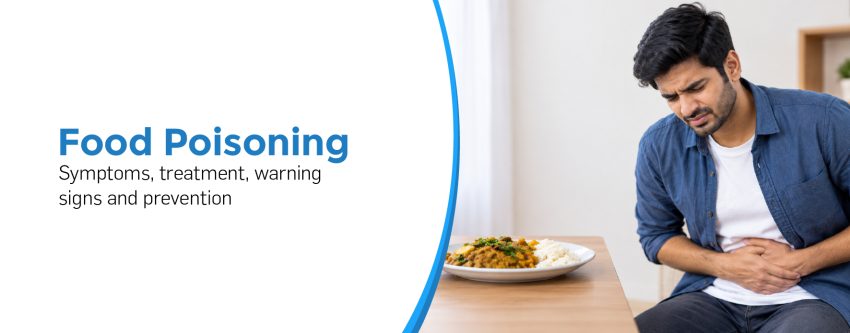
Food poisoning is an illness caused by consuming food or water contaminated with harmful bacteria, viruses, parasites or certain chemicals. It can cause digestive symptoms ranging from mild discomfort to severe dehydration and other complications. Symptoms may begin within hours of eating contaminated food or may take several days, depending on the cause.
Most people recover with adequate fluids, rest and appropriate care. However, certain symptoms require prompt medical attention, particularly in young children, older adults, pregnant women and people with weakened immunity.
What Causes Food Poisoning?
Causes of food poisoning include contaminated food or water, inadequate cooking, poor hygiene, cross-contamination and improper food storage. Commonly involved organisms include bacteria such as Salmonella and Campylobacter and viruses such as norovirus.
Foods that carry a higher risk include:
- Raw or undercooked meat, poultry and seafood
- Undercooked eggs
- Unpasteurised milk and dairy products
- Unwashed fruits and vegetables
- Raw sprouts
- Food kept at unsafe temperatures
- Contaminated water
Food Poisoning Symptoms
Food poisoning symptoms can vary depending on the organism or contaminant involved. Common symptoms include:
- Diarrhoea
- Nausea
- Vomiting
- Stomach cramps or pain
- Fever
- Weakness and tiredness
- Loss of appetite
- Headache or body aches in some infections
Symptoms may range from mild to severe and can last for several hours or days.
What Are the Symptoms of Food Poisoning?
If you are wondering what the symptoms of food poisoning are, the most typical signs are diarrhoea, abdominal cramps, nausea, vomiting and fever. The timing of symptoms can vary significantly depending on the germ responsible for the illness.
Food Poisoning and Diarrhoea
Food poisoning and diarrhoea commonly occur together because certain infections affect the digestive tract and cause increased fluid loss. Frequent loose stools can result in dehydration, particularly in children and older adults.
Drink adequate fluids and consider an oral rehydration solution when diarrhoea is significant. Signs of dehydration include excessive thirst, dry mouth, reduced urination, dark urine and dizziness.
Food Poisoning Stomach Pain
Food poisoning stomach pain may occur as cramping, discomfort or abdominal tenderness. It can accompany diarrhoea, vomiting and nausea. The intensity depends on the underlying cause.
Severe or persistent abdominal pain should not automatically be assumed to be food poisoning because other digestive conditions can produce similar symptoms.
Food Poisoning Treatment
Food poisoning treatment mainly focuses on preventing dehydration and managing symptoms while the body recovers. For many uncomplicated cases, treatment may include:
- Drinking water and oral rehydration solutions
- Taking adequate rest
- Gradually returning to normal food as symptoms improve
- Monitoring for worsening symptoms
- Taking medicines only when recommended by a healthcare professional
Antibiotics are not required for every case of food poisoning. Their use depends on the specific infection and clinical assessment.
People with severe dehydration may require medical treatment, including intravenous fluids. Testing may sometimes be recommended when symptoms are severe, prolonged or associated with specific warning signs.
Diet After Food Poisoning
A suitable Diet after food poisoning should focus on hydration and easily tolerated foods. Once vomiting settles and you can eat comfortably, gradually introduce foods such as:
- Rice or soft khichdi
- Bananas
- Toast or plain bread
- Boiled potatoes
- Plain cereals
- Light soups
- Other easily digestible foods
Eat small portions initially and gradually return to your usual balanced diet as your appetite and digestion improve.
Foods to Avoid After Food Poisoning
During recovery, some foods may worsen nausea, diarrhoea or stomach discomfort. Foods to avoid after food poisoning may include:
- Fried or greasy foods
- Very spicy foods
- Alcohol
- Excessive caffeine
- Very sugary drinks
- Heavy or highly processed meals
If a particular food worsens your symptoms, avoid it temporarily and reintroduce it later when you feel better.
Warning Signs of Food Poisoning
Although many cases are mild, certain symptoms may indicate a more serious illness or dehydration. Seek medical attention for:
- Bloody diarrhoea
- Diarrhoea lasting more than three days
- High fever
- Frequent vomiting that prevents you from keeping fluids down
- Very little or no urination
- Severe dizziness
- Signs of significant dehydration
- Severe or worsening abdominal pain
These warning signs warrant medical assessment.
When Should You See a Doctor for Food Poisoning?
When should you see a doctor for food poisoning depends on the severity and duration of symptoms. Medical advice is recommended when diarrhoea or vomiting persists, there is blood in the stool, you develop a high fever, you cannot keep fluids down, or you notice signs of dehydration.
Pregnant women, young children, older adults and people with weakened immune systems may need earlier medical evaluation because they have a higher risk of serious foodborne illness.
How to Prevent Food Poisoning
Prevention involves safe food handling practices. The CDC recommends four basic steps: clean, separate, cook and chill.
- Keep Hands and Surfaces Clean
Wash your hands before preparing or eating food. Clean kitchen surfaces, utensils and cutting boards regularly.
- Prevent Cross-Contamination
Keep raw meat, poultry, seafood and eggs separate from ready-to-eat foods. Use separate utensils or cutting boards when appropriate.
- Cook Food Properly
Cook meat, poultry, seafood and eggs thoroughly. Proper cooking helps destroy harmful germs.
- Store Food Safely
Refrigerate perishable food promptly and avoid leaving it at room temperature for prolonged periods.
- Wash Fresh Produce
Rinse fruits and vegetables thoroughly under running water before eating or preparing them.
Who Is More Vulnerable to Severe Food Poisoning?
Anyone can develop food poisoning, but severe illness is more likely among:
- Children under five
- Adults aged 65 and above
- Pregnant women
- People with weakened immune systems
- People with certain underlying health conditions
These groups should seek medical advice promptly if significant symptoms develop.
Consult a General Physician for Persistent Symptoms
A general physician can assess symptoms, check for dehydration, review your medical history and determine whether investigations or further treatment are required. Those searching for the Best general physician doctor in Dwarka, Delhi should seek a qualified doctor when symptoms are persistent, severe or unusual.
Food Poisoning Care at Venkateshwar Hospital
Venkateshwar Hospital provides medical evaluation and treatment for a range of acute and digestive health concerns. Patients with persistent vomiting, diarrhoea, abdominal pain, fever or dehydration can consult a physician for appropriate assessment and management.
Conclusion
Food poisoning commonly causes diarrhoea, vomiting, nausea, abdominal pain and sometimes fever. Most mild cases improve with adequate hydration, rest and gradual dietary recovery. However, persistent symptoms, blood in the stool, high fever, severe pain or signs of dehydration should not be ignored. Practising safe food preparation, cooking and storage can significantly reduce the risk of foodborne illness.
Frequently Asked Questions
How long does food poisoning usually last?
The duration varies depending on the organism or contaminant involved. Some illnesses resolve within a day, while others can last several days or longer.
Can food poisoning cause fever?
Yes. Fever can occur with certain foodborne infections, along with diarrhoea, vomiting and abdominal cramps.
What should I drink during food poisoning?
Water and oral rehydration solutions can help replace fluids and electrolytes lost through vomiting or diarrhoea.
Should I take antibiotics for food poisoning?
Not necessarily. Many cases do not require antibiotics. A doctor can determine whether antibiotics or other specific treatment is appropriate.
Can food poisoning cause dehydration?
Yes. Repeated diarrhoea and vomiting can cause substantial fluid loss. Reduced urination, dry mouth, excessive thirst and dizziness can indicate dehydration.
Can I eat normally after food poisoning?
Once vomiting settles and you can tolerate food, gradually return to your regular diet. Start with small portions of foods that are easy to digest.
Is blood in the stool a warning sign?
Yes. Bloody diarrhoea should be medically evaluated, particularly when accompanied by fever, severe abdominal pain or dehydration.
How can I prevent food poisoning at home?
Wash your hands and food-preparation surfaces, separate raw and ready-to-eat foods, cook food thoroughly and refrigerate perishable foods promptly.
Can food poisoning happen from restaurant food?
Yes. Contamination can occur during food preparation, cooking, handling or storage. Choosing hygienic food establishments and properly cooked food can help reduce the risk.
When is food poisoning an emergency?
Severe dehydration, persistent vomiting, bloody diarrhoea, severe abdominal pain, difficulty staying awake or other rapidly worsening symptoms require prompt medical assessment.