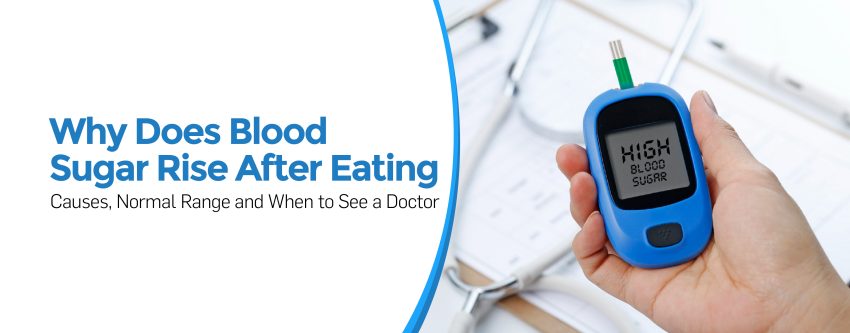
It is normal for blood glucose to increase after eating because the body breaks down carbohydrates from food into glucose, which enters the bloodstream. Insulin then helps move glucose into the body’s cells for energy. However, a rise that is consistently too high or remains elevated for a long time may indicate problems with insulin production or insulin resistance.
Understanding blood sugar levels after eating, what causes them to rise, and when medical advice is needed can help support better blood sugar management.
Why Does Blood Sugar Rise After Eating?
The main reason is digestion. After a meal, carbohydrates are converted into glucose and absorbed into the bloodstream. This causes blood glucose to rise temporarily. The pancreas responds by releasing insulin, which helps cells absorb glucose and brings blood sugar back toward its usual level.
In healthy individuals, this process is generally well controlled. In people with diabetes, prediabetes, or insulin resistance, glucose may remain elevated for longer.
What Causes High Blood Sugar After Eating?
Several factors can contribute to high blood sugar after eating, including:
- Eating large portions or meals high in carbohydrates
- Consuming sugary foods and drinks
- Eating refined carbohydrates such as white bread, pastries and sweets
- Insufficient insulin production
- Insulin resistance
- Taking diabetes medication incorrectly or missing a dose
- Physical inactivity after meals
- Stress or illness
- Poor sleep
- Certain medications, including some steroids
Blood Sugar Spike Causes
Common blood sugar spike causes include large carbohydrate-heavy meals, sugary beverages, processed foods, eating irregularly, and reduced physical activity. Individual responses can vary, so monitoring glucose patterns can help identify specific triggers.
What Is the Normal Blood Sugar Level After Eating?
Blood glucose targets can vary depending on age, health status, pregnancy, and whether a person has diabetes. For many adults without diabetes, blood glucose is generally expected to remain below 140 mg/dL two hours after starting a meal.
For people with diabetes, the American Diabetes Association commonly recommends a target of less than 180 mg/dL 1–2 hours after the beginning of a meal, although individual targets may differ.
Therefore, the normal blood sugar level after eating should be interpreted in the context of the individual rather than based on a single reading.
How Long Does Blood Sugar Stay Elevated After a Meal?
Glucose typically begins to rise soon after eating and may reach its peak within the first couple of hours, depending on the meal and individual metabolism. It should gradually decrease as insulin helps glucose enter the body’s cells.
If post-meal blood sugar remains high repeatedly, it may be worth discussing the pattern with a healthcare professional.
Foods That Can Increase Blood Sugar
Certain foods can raise blood glucose more rapidly, particularly those containing large amounts of added sugar or refined carbohydrates.
Examples of foods that increase blood sugar include:
- Sweets and desserts
- Sugary beverages and packaged juices
- White bread and refined flour products
- Cakes, biscuits and pastries
- Large portions of white rice
- Sweetened cereals
- Candy and chocolate with added sugar
Whole grains, vegetables, legumes, lean proteins and fibre-rich foods may result in a slower rise in blood glucose when included as part of a balanced meal.
What Can Help Control Blood Sugar After Eating?
Some simple lifestyle habits may help support healthier glucose levels:
- Choose Balanced Meals
Include vegetables, protein, healthy fats and high-fibre carbohydrates rather than relying mainly on refined carbohydrates.
- Watch Portion Sizes
Even nutritious carbohydrate-containing foods can raise glucose when consumed in large quantities.
- Stay Physically Active
Light activity after meals, when appropriate for your health, may help improve glucose utilisation.
- Monitor Blood Glucose
If you have diabetes or have been advised to monitor your glucose, checking it at recommended times can help identify patterns.
- Take Prescribed Medicines Correctly
Do not change diabetes medication or insulin doses without consulting your doctor.
- Manage Sleep and Stress
Poor sleep and prolonged stress can affect hormones involved in blood glucose regulation.
When Should You See a Doctor for High Blood Sugar?
You should know when to see a doctor for high blood sugar, particularly if elevated readings occur repeatedly or are accompanied by symptoms such as:
- Excessive thirst
- Frequent urination
- Unusual tiredness
- Blurred vision
- Unexplained weight loss
- Increased hunger
- Slow-healing wounds
- Recurrent infections
Very high blood sugar accompanied by vomiting, severe weakness, confusion, difficulty breathing or dehydration can require urgent medical attention.
If you have repeatedly elevated readings but no symptoms, schedule a medical consultation rather than relying on a single home glucose reading. Your doctor may recommend tests such as fasting blood glucose, HbA1c or an oral glucose tolerance test based on your situation.
Can a Health Checkup Help Detect Blood Sugar Problems?
Regular health assessments can help identify diabetes, prediabetes and other metabolic concerns, particularly in people with risk factors such as obesity, family history, high blood pressure or an inactive lifestyle. Depending on your age and risk profile, full body health checkup packages may include blood glucose and other relevant investigations.
When to Consult a Diabetes Specialist
If your glucose levels are repeatedly above your recommended range, or you are experiencing symptoms of diabetes, consult a qualified healthcare professional. A specialist can assess your blood sugar pattern, medications, diet, lifestyle and other risk factors and create an appropriate management plan.
For individuals looking for the best diabetes doctor in Delhi, Venkateshwar Hospitals provides diabetes and metabolic care through specialist medical services.
Conclusion
A temporary rise in blood glucose after eating is a normal part of digestion. However, consistently elevated readings may indicate impaired glucose regulation, insulin resistance or diabetes. Paying attention to meal choices, portion sizes, physical activity and glucose patterns can support better blood sugar management. If elevated readings persist or symptoms develop, consult a doctor for appropriate evaluation and treatment.
Frequently Asked Questions
Is it normal for blood sugar to rise after eating?
Yes. Blood glucose normally increases after a meal as carbohydrates are digested and glucose enters the bloodstream. The level should gradually fall as insulin helps the body use glucose.
What is a normal blood sugar level two hours after eating?
For many adults without diabetes, a two-hour blood glucose level below 140 mg/dL is generally considered normal. People with diabetes may have different individual targets.
Why does blood sugar rise after eating even when I do not have diabetes?
Digestion naturally increases blood glucose. A larger carbohydrate intake, sugary foods, stress, lack of physical activity or temporary illness can result in a greater rise.
Which foods cause blood sugar to rise quickly?
Sugary drinks, sweets, refined grains, pastries, white bread and other foods high in rapidly digested carbohydrates can cause faster glucose increases.
Can walking after a meal help lower blood sugar?
Light physical activity after eating may help muscles use glucose and can support blood sugar control. However, exercise recommendations should be individualised, especially for people taking insulin or certain diabetes medicines.
When should I be concerned about high blood sugar after meals?
Repeatedly elevated readings, particularly when accompanied by excessive thirst, frequent urination, fatigue or blurred vision, should be discussed with a doctor.
Can stress affect blood sugar after eating?
Yes. Stress hormones can affect glucose regulation and may contribute to higher blood sugar levels in some people.
Is post-meal blood sugar more important than fasting blood sugar?
Both provide useful information. Fasting glucose shows blood sugar after a period without food, while post-meal readings show how the body responds to eating.
Can high blood sugar after meals indicate diabetes?
Repeatedly elevated post-meal glucose can be associated with prediabetes or diabetes, but diagnosis requires appropriate medical testing rather than a single reading.
What tests can check for diabetes?
Doctors may use fasting blood glucose, HbA1c, an oral glucose tolerance test or other tests depending on the person’s symptoms and risk factors.
Written & Verified By:

Dr. Anil Laul (MBBS, MD)
Director Internal Medicine
Meet The Doctor